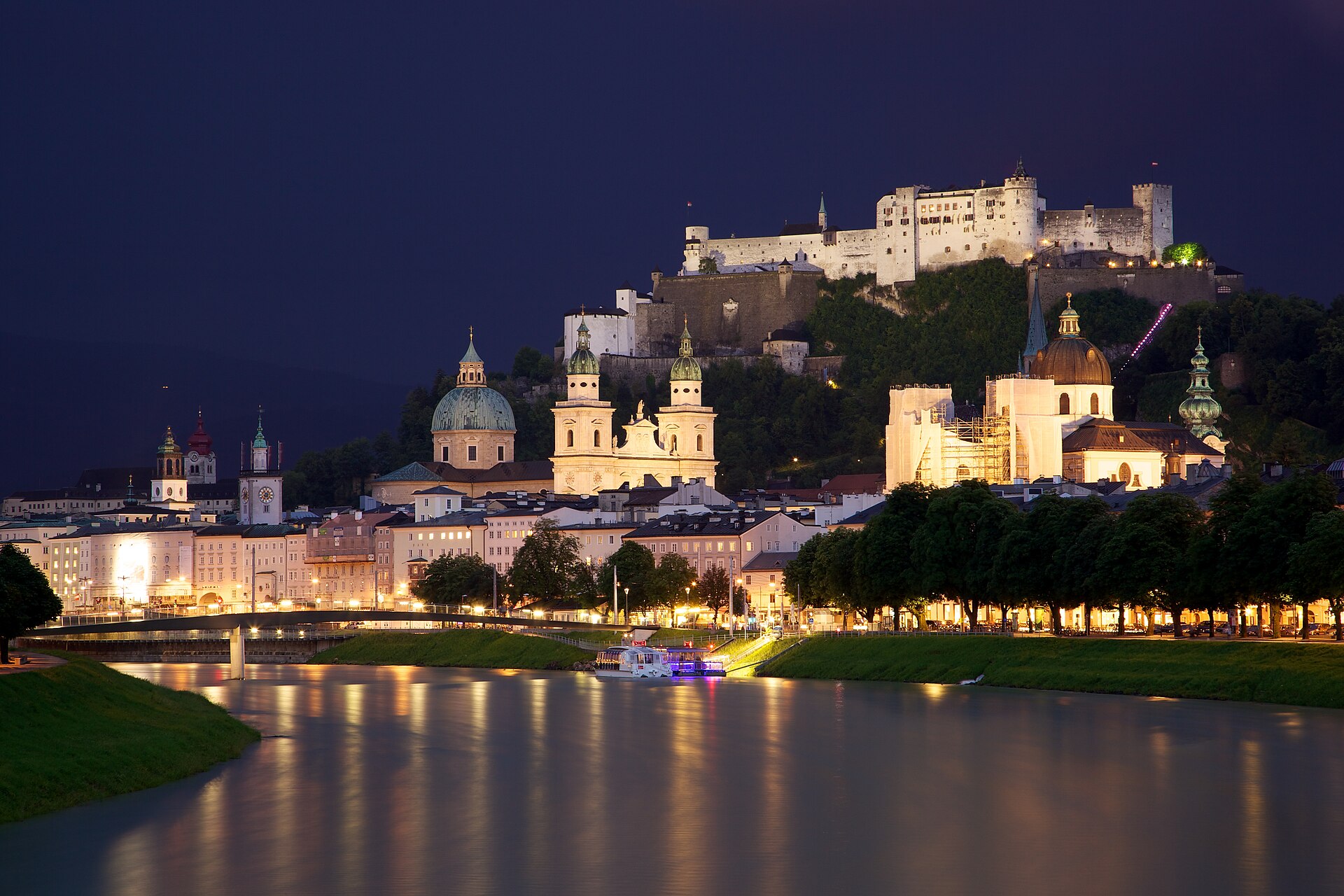
The 25th Salzburger Trilog took place in Salzburg on 23 and 24 August 2026. Organisers included the Liz Mohn Foundation in cooperation with the Bertelsmann Foundation; the event was publicised under the theme “Leadership in turbulent times.” German-language outlets such as DerStandard reported on the discussions shortly after the event, and the Bertelsmann Foundation published a summary of the conference.
The Trilog has built a reputation as a space where policymakers, business leaders and intellectuals engage in intensive, often private deliberation. This edition focused on the kinds of leadership required to navigate rapid technological shifts, intensifying geopolitics and rising societal polarisation. Organiser statements highlighted attitude, trust and adaptability as essential components of good leadership.
- The 25th Salzburger Trilog was held in Salzburg on 23–24 August 2026.
- Organisers included the Liz Mohn Foundation together with the Bertelsmann Foundation; the event theme was “Leadership in turbulent times.”
- The format has recently been run under the direction of former Austrian chancellor Wolfgang Schüssel; historian Harold James was among the participants.
Participants and the event’s format
Both organiser materials and independent media note that the event hosted an international group of senior participants: executives, civil society representatives and academics. The Austrian newspaper Die Presse reported that historian Harold James attended the meeting at the invitation of the Liz Mohn Foundation.
In recent years the event format has been run under the direction of former Austrian chancellor Wolfgang Schüssel. The Trilog typically combines panels, roundtable exchanges and informal working groups. Designed as a deliberative rather than a public debate, the format allows for in-depth exchanges at the cost of broader transparency — a trade-off frequently highlighted by commentators.
Key topics: geopolitics, AI and Europe’s capacity to act
The subjects addressed in Salzburg reflected pressing strategic dilemmas. According to organiser reports and press coverage, discussions examined Europe’s posture toward the United States and China, including security, economic interdependence and the resilience needed to preserve strategic autonomy. Participants explored how external pressures shape internal policy choices and vice versa.
Technological change — particularly artificial intelligence — was another focal point. Conversations revolved around how organisations must adapt to fast-moving innovation, what ethical guardrails are needed, and which leadership skills are essential for managing technological transitions responsibly. Event materials emphasised that technical knowledge alone does not suffice; political sensitivity, communication skills and institutional agility were cited as equally important.
Domestic challenges such as institutional distrust and political polarisation were also linked to the question of leadership. Participants discussed how erosion of public trust and shrinking spaces for reasoned debate constrain leaders’ ability to act strategically, thereby creating feedback loops between domestic legitimacy and foreign policy options.
Debate dynamics and limits of public reporting
Because the Trilog is organised as a semi-private forum, detailed records of internal debates are limited. Public reporting offers fragments: thematic takeaways and mentions of individual contributions rather than full transcripts. This structure fosters candid discussion but makes it difficult for outsiders to assess the balance of perspectives or to determine which policy recommendations, if any, were privileged.
Media coverage points to a recurring tension in the conversations: the trade-off between pragmatic short-term choices and normative commitments. In other words, participants repeatedly wrestled with how to reconcile realpolitik considerations — such as immediate economic and security interests — with long-term obligations to democratic norms and values. The composition of the invited group and the role of moderators inevitably shape which arguments come to the fore.
Implications and unanswered questions
At this stage, concrete, publicly announced policy outcomes from the 25th Salzburger Trilog are limited. The organisers issued statements emphasising general orientations — for example, that leadership requires moral stance, trust-building and the capacity for transformation — but no specific collective commitments were made public. That reflects the Trilog’s function as a forum for orientation and networking rather than a venue for binding decisions.
Looking ahead, two lines of inquiry matter. First, whether insights and network connections formed in Salzburg will be translated into concrete policy advice or institutional change within governments, companies or international organisations. Second, how participants will operationalise the balance between short-term imperatives and long-term responsibilities, especially in areas like technology governance and strategic autonomy. Observers will be watching whether the normative emphases discussed in Salzburg — stance, trust, transformability — are turned into actionable strategies.
In summary, the 2026 Salzburger Trilog convened a high-level conversation on leadership at a time of mounting strategic complexity. It provided orientation and cross-sector exchange rather than immediate blueprints for action. The real measure of its influence will depend on whether ideas from the conference move from private deliberation into public policy and institutional practice.
IO SYNTHESIS
THREE-SOURCE ARTICLE ANALYSIS
The 25th Salzburger Trilog was held in Salzburg on 23–24 August 2026.
OPEN EVIDENCE ↗Organisers included the Liz Mohn Foundation together with the Bertelsmann Foundation; the event theme was “Leadership in turbulent times.”
OPEN EVIDENCE ↗The format has recently been run under the direction of former Austrian chancellor Wolfgang Schüssel; historian Harold James was among the participants.
OPEN EVIDENCE ↗✓ SOURCES AND DOCUMENTS
01 derstandard.at ↗02 derstandard.at ↗03 bertelsmann-stiftung.de ↗Sources last checked · 27.08.2026, 01:53This article was written and checked by the ZEITUNG.IO newsroom. It is updated when new verified information becomes available.