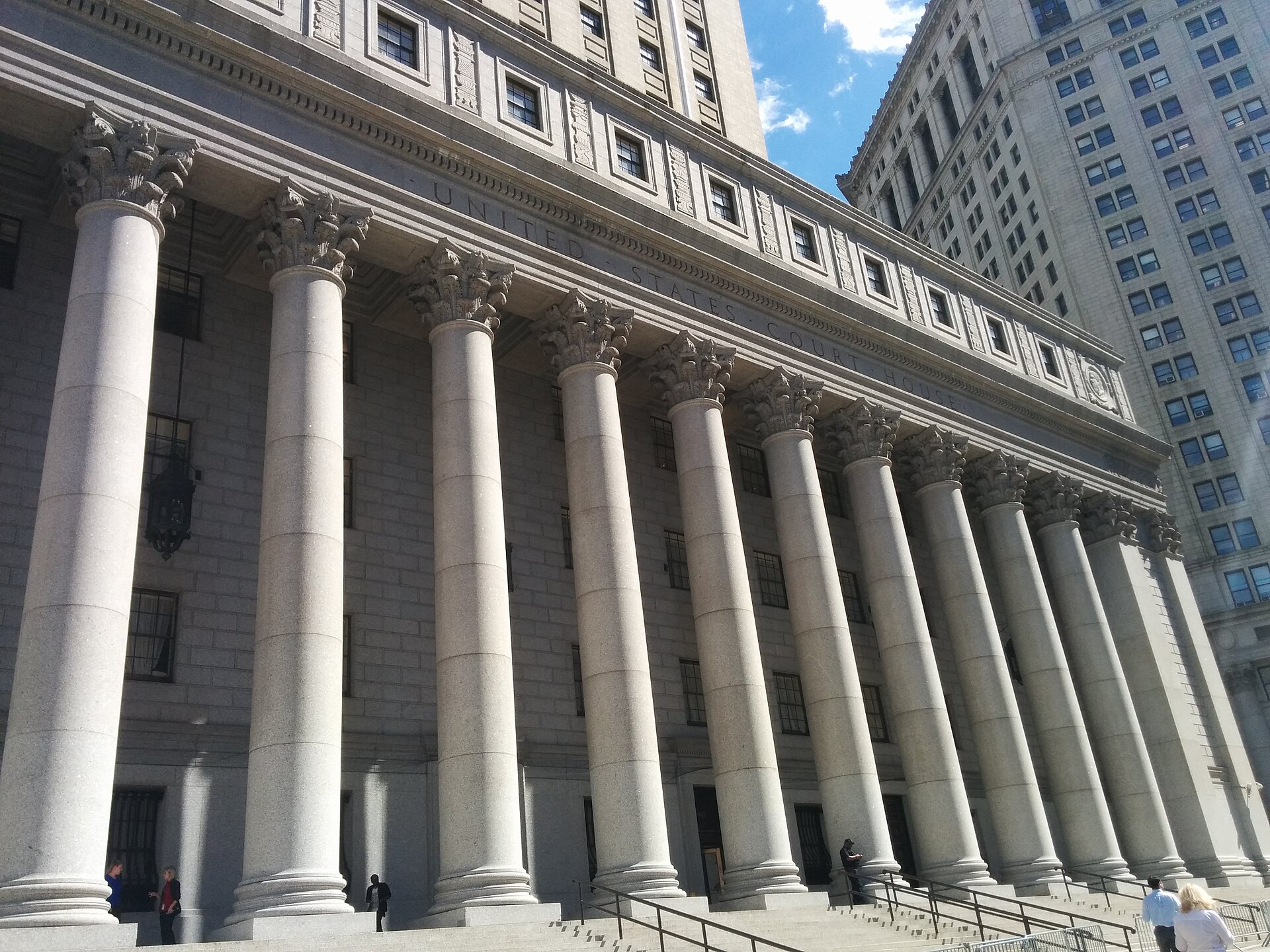
On August 28, 2026, U.S. District Judge Alvin K. Hellerstein in Manhattan denied former President Donald Trump’s motion to remove the already decided New York criminal matter often referred to as the ‘hush‑money’ case to a federal court. In his written ruling, Hellerstein found that the reasons advanced by Trump’s lawyers were “neither new nor legally sufficient,” and — in English — that “He has failed to show good cause and diligence.”
The court’s opinion, cited in reporting by the Associated Press and Reuters, also included the sentence: “Paying hush money to an adult film star or engaging in a cover‑up of an embarrassment are not subsumed in presidential immunity.” The decision refuses the defense’s request for “removal,” keeping jurisdiction with state courts in New York.
- U.S. District Judge Alvin K. Hellerstein denied on August 28, 2026 the bid to move the New York ‘hush‑money’ case to federal court.
- Hellerstein wrote that the defense’s arguments were “neither new nor legally sufficient” and said: “He has failed to show good cause and diligence.”
- A jury convicted Trump in May 2024 on charges of falsifying business records tied to a $130,000 payment to Stormy Daniels; the indictment included 34 counts.
- Judge Juan Merchan issued a conditional discharge on January 10, 2025 (no jail or fine), but the convictions remain and are subject to a state appeal.
- AP, Reuters and ORF reported Hellerstein’s decision and noted the defense’s plan to appeal.
The legal backdrop: immunity and the Supreme Court’s 2024 ruling
The procedural fight references a landmark Supreme Court decision from July 1, 2024 — Trump v. United States, No. 23‑939 — which addressed certain aspects of presidential immunity. That ruling has since become a touchstone for defense strategies in several cases involving the former president, but it left open numerous application issues.
Hellerstein’s analysis engaged that jurisprudential landscape and rejected the suggestion that the conduct at issue in the New York proceeding fell within the protective ambit of presidential immunity as sketched by the Supreme Court. By distinguishing private payments and efforts to conceal embarrassment from core presidential functions, the judge drew a boundary between actions that might be covered by immunity and those that are not.
Case history and charges
The New York case centers on falsified business records connected to an alleged $130,000 payment to adult film actor Stormy Daniels. A jury found Trump guilty in May 2024 on counts related to the falsification of business records; reporting identifies 34 such counts in the indictment. The convictions have been the subject of subsequent motions and appeals at the state level.
Judge Juan Merchan, presiding over sentencing matters in the state case, on January 10, 2025, imposed a conditional discharge: no prison term and no monetary fine, while leaving the convictions intact. The state appeal process is ongoing even as the defense pursues federal procedural avenues, arguing that immunity questions require federal resolution.
Immediate reactions and procedural consequences
Following Hellerstein’s order, Trump’s legal team signaled that they would appeal the ruling. AP and Reuters report that the defense has prepared to challenge the denial, indicating a multi‑track litigation strategy that combines state appeals with federal filings attempting to shift forum. For now, Hellerstein’s decision keeps the state‑court framework in place.
Legal analysts note that denying removal preserves the current state appellate route, but it does not foreclose other federal or appellate actions. A federal court’s acceptance of removal could have offered the defense different procedural timelines and routes to higher federal appellate review; the denial for now means those federal pathways are not opened by this motion.
Wider implications for immunity jurisprudence and other cases
The ruling is significant beyond the single criminal file because it marks a federal judge explicitly distinguishing private, allegedly criminal acts tied to personal reputation management from actions that might plausibly be called presidential. That distinction could be cited by prosecutors and judges in other jurisdictions confronted with similar removal requests and immunity arguments.
At the same time, the legal terrain is far from settled. The Supreme Court’s 2024 framework remains influential, but the application to specific facts will continue to be litigated. Hellerstein’s opinion thus contributes to a growing mosaic of court rulings that will collectively define the practical limits of post‑office immunity claims, particularly where private conduct and alleged attempts at concealment intersect with an official’s term.
Remaining uncertainties and possible next steps
Several open questions persist. Chief among them is how appellate courts — particularly the Second Circuit and potentially the Supreme Court — will treat appeals that challenge Hellerstein’s denial of removal. Because Hellerstein’s ruling addresses only the procedural removal request, appellants may pursue multiple paths, including expedited interlocutory appeals in federal court or continued state appeals on the substance of the convictions.
Additionally, other pending matters involving the former president may present different factual matrices that will test the reach of immunity doctrines in future decisions. For the immediate future, Hellerstein’s order means that the New York state proceedings remain the operative forum while litigation over removal and immunity continues on parallel tracks.
IO SYNTHESIS
THREE-SOURCE ARTICLE ANALYSIS
U.S. District Judge Alvin K. Hellerstein denied on August 28, 2026 the bid to move the New York ‘hush‑money’ case to federal court.
OPEN EVIDENCE ↗Hellerstein wrote that the defense’s arguments were “neither new nor legally sufficient” and said: “He has failed to show good cause and diligence.”
OPEN EVIDENCE ↗A jury convicted Trump in May 2024 on charges of falsifying business records tied to a $130,000 payment to Stormy Daniels; the indictment included 34 counts.
OPEN EVIDENCE ↗✓ SOURCES AND DOCUMENTS
01 ORF · News ↗02 apnews.com ↗03 axios.com ↗Sources last checked · 28.08.2026, 22:35This article was written and checked by the ZEITUNG.IO newsroom. It is updated when new verified information becomes available.