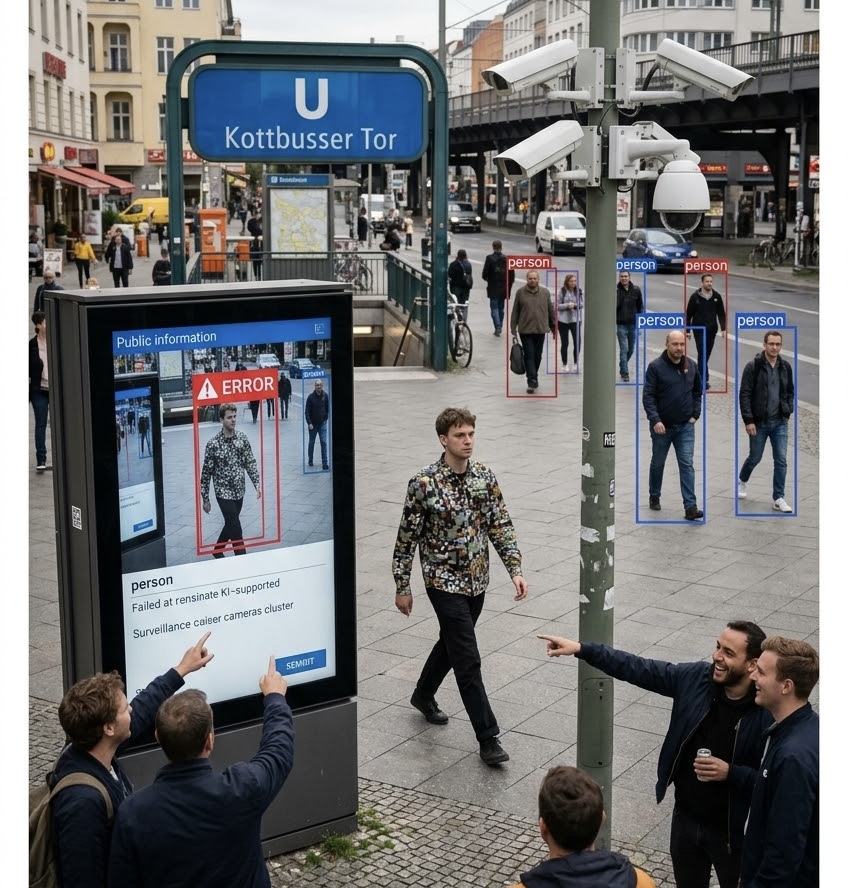
In an interview published by the Austrian newspaper Der Standard on 30 August 2026, Stefan Strauß, a researcher at the Institute for Technology Assessment (ITA) of the Austrian Academy of Sciences (ÖAW), described camera‑equipped smartglasses as "an ideological technology." The remarks are part of a wider conversation about the societal impact of wearable cameras and their compatibility with data‑protection norms.
Strauß’s comments join a growing body of journalistic investigations and expert commentary that have questioned how such devices are used, what they record, and how data are analyzed. International outlets have published reports on potential face‑recognition testing, data practices, and the social consequences of normalizing always‑on cameras in everyday life.
- Der Standard published an interview with Stefan Strauß on 30 August 2026.
- Stefan Strauß is a Senior Academy Scientist at the Institute for Technology Assessment (ÖAW/ITA).
- International reporting has raised privacy concerns about Meta’s camera‑equipped smartglasses; manufacturers have issued updates to mitigate some recording risks.
What risks are being highlighted
Strauß and other critics outline several interconnected risks. The first is the erosion of situational privacy: people near a glasses wearer can be recorded or profiled without informed consent. When coupled with AI analysis, recordings may lead to automated judgements about behaviour or identity. This is not only a matter of occasional recording; it reflects a shift toward continuous, low‑effort data capture.
Another commonly raised concern is power asymmetry. Wearable cameras lower the threshold for sustained observation: unlike a smartphone that a person holds and controls, glasses can continuously collect visual data while being socially unobtrusive. That asymmetry concentrates the decision to collect others’ data in the hands of the device wearer and, by extension, the device manufacturer and service operators.
Experts also warn about indirect social effects: behavioural adaptations by the public, changing norms about what is acceptable in public spaces, and the normalization of surveillance. These shifts can have long‑term consequences that are difficult to reverse once established.
Legal claims and their limits
In the Der Standard interview, Strauß is quoted as saying smartglasses "clearly violate the General Data Protection Regulation." That statement represents his legal and normative interpretation rather than a court ruling or a published decision by a data protection authority. Whether a given use of smartglasses breaches the GDPR depends on factual specifics — purpose limitation, lawful basis for processing, data minimization, transparency, and safeguards like data protection impact assessments.
Regulators across the EU and national supervisory authorities have increased scrutiny of such products, but binding legal determinations require formal procedures, complaints, or litigation. So far, press investigations and critical reporting have elevated the issue politically and publicly, but they are not the same as judicial or administrative findings that would establish illegality in every deployment scenario.
Industry responses and technical mitigation
Manufacturers have responded to criticism with technical changes and software updates. Reporting from outlets including Ars Technica, AndroidCentral and Tom's Guide documents that companies like Meta have adjusted features — for example, updates intended to prevent covert recording by hardening LED indicators that signal recording, and disabling certain functionalities that can be abused.
These patches indicate that companies are responsive to reputational and regulatory risk. However, technical mitigations alone do not resolve the fundamental normative and legal questions. LEDs can be obstructed; software controls can be bypassed or misconfigured; and hardware innovation may outpace protections. Thus, technical fixes can reduce some abuse cases but do not substitute for legal clarity and robust governance.
Policy consequences and social implications
The debate has clear policy implications. Lawmakers, privacy authorities and civil society groups are calling for clearer rules governing camera‑wearables in public spaces, workplaces and commercial settings. In the EU, such calls intersect with broader legislative efforts around AI and biometric processing, where both sectoral and horizontal rules are being considered.
For employers, event organisers and public venue operators, the arrival of widespread wearable cameras raises immediate practical questions: Should smartglasses be banned in certain contexts? Are signage and consent processes required? How should organisations enforce rules without introducing invasive checks? These dilemmas point to the need for actionable guidance and consistent enforcement that balance innovation with rights protection.
Open questions and the path forward
Key uncertainties remain. A definitive legal determination on the permissibility of smartglasses across contexts has not been issued by EU‑level regulators or courts; outcomes will hinge on concrete implementations and specific use cases. Meanwhile, manufacturers are likely to continue iterating on hardware and software, which will keep regulatory questions in flux.
Experts such as Strauß argue for a proactive regulatory stance: mandatory transparency, independent privacy impact assessments, and explicit bans on particularly intrusive uses such as remote biometric identification in public without strict safeguards. Whether policymakers adopt such measures, or whether market forces and voluntary corporate changes are deemed sufficient, will shape how—and how widely—this technology integrates into daily life.
IO SYNTHESIS
THREE-SOURCE ARTICLE ANALYSIS
Der Standard published an interview with Stefan Strauß on 30 August 2026.
OPEN EVIDENCE ↗Stefan Strauß is a Senior Academy Scientist at the Institute for Technology Assessment (ÖAW/ITA).
OPEN EVIDENCE ↗International reporting has raised privacy concerns about Meta’s camera‑equipped smartglasses; manufacturers have issued updates to mitigate some recording risks.
OPEN EVIDENCE ↗✓ SOURCES AND DOCUMENTS
01 derstandard.at ↗02 androidcentral.com ↗03 tomsguide.com ↗Sources last checked · 31.08.2026, 01:07This article was written and checked by the ZEITUNG.IO newsroom. It is updated when new verified information becomes available.