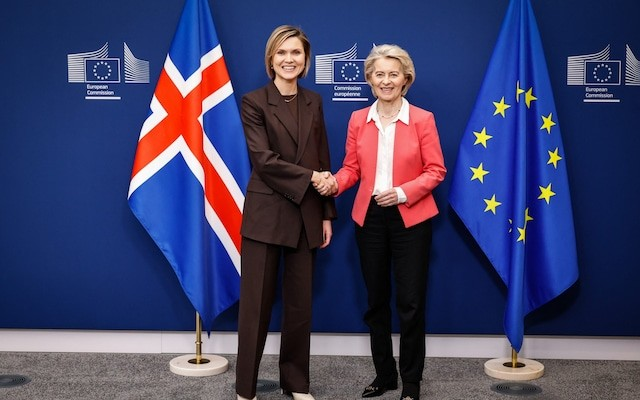
The referendum scheduled for 29 August 2026 is the continuation of a political process that began more than a decade ago. Iceland formally applied to join the European Union in 2009, and negotiations opened during 2010–2013 before being suspended. The decision to hold a nationwide vote now reflects changes in domestic politics as well as shifting assessments of economic and strategic interests. The Icelandic parliament, the Althing, adopted a resolution on 27 May 2026 to hold the referendum after the government proposed it on 6 March 2026; these procedural milestones are documented in official parliamentary records and government releases.
Presenting the question directly to voters transfers a contentious policy conflict—centred on fisheries management, national sovereignty and economic expectations—into a popular decision. Importantly, the referendum is structured as an authorisation: a positive result would empower the government to resume accession negotiations with the European Union, but it would not culminate in immediate membership. Any eventual treaty outcome would require subsequent approvals, including legislative procedures and possibly a further referendum, which the government and the Althing have made clear in their public descriptions of the process.
- Referendum date: 29 August 2026 (Althing resolution adopted 27 May 2026).
- Exact ballot question: “Should Iceland resume accession negotiations with the European Union? — Yes / No.”
- A “Yes” authorises the government to resume negotiations but does not automatically result in EU membership; further ratification steps would be required.
- Early voting opened on 27 July 2026; polling stations close no later than 22:00 local time.
What the ballot question means in legal terms
The exact wording of the ballot, as recorded in Althing materials, asks: “Should Iceland resume accession negotiations with the European Union? — Yes / No.” That formulation was scrutinised by legal advisers and referenced by the Venice Commission; it guides the legal interpretation of the vote. Under Icelandic law and the government's published guidelines, a ‘‘Yes’’ authorises the executive to open negotiations with the EU but does not bind the state to accept any final agreement without further consent. The Ministry for Foreign Affairs has reiterated that a completed negotiation would trigger additional domestic procedures before a membership treaty could be concluded.
This two-step framework—authorisation to negotiate followed by a separate ratification phase—aims to provide democratic legitimacy to any substantial concessions that may be required in sensitive policy areas. It also preserves a legal distinction between the preparatory phase of negotiating technical terms and the final political decision on accession.
Campaign dynamics and key domestic issues
According to reporting by Icelandic public broadcaster RÚV and international news agencies, the campaign has been tightly contested. Fisheries policy dominates much of the domestic debate because the sector is both economically vital and symbolically tied to national sovereignty. Opponents of renewed negotiations argue that EU membership could weaken Iceland’s control over fishing quotas and maritime resources. Supporters counter that engagement with the EU could provide broader economic stability and improved market access.
Prime Minister Kristrún Frostadóttir’s government placed the referendum on the calendar, making the question a central element of current political strategy. Parties and civic organisations are divided: some favour starting talks to explore potential gains from alignment with EU regulations and markets, while others insist that preserving full national control over key resources must remain the priority. Media coverage highlights intense local campaigning and a mobilisation of interest groups on both sides, underlining how the vote cuts across conventional party lines.
Logistics of the vote and procedural timetable
The electoral timetable stipulates that early voting opened on 27 July 2026 and that the main polling day is 29 August 2026. Polling stations are required to close no later than 22:00 local time; the National Electoral Commission (Landskjörstjórn) is responsible for organising the process and for publishing official results after counting. RÚV reported several thousand early votes, a figure widely cited in international wires, although such early tallies do not necessarily predict the final outcome.
Organising a nationwide referendum involves logistical challenges: distributing ballots with the precise approved wording, training poll workers, and ensuring transparency for domestic and potential international observers. The authorities have published practical guidance for voters and have made provisions for public information campaigns to explain the legal consequences of a ‘‘Yes’’ or ‘‘No’’. Final, official results will only be available after the Landskjörstjórn completes the count and certifies the outcome.
European implications and possible negotiation trajectories
A positive vote would primarily change Iceland’s external policy posture by authorising negotiations with the EU, which could take months or years and would likely cover complex chapters such as fisheries, trade, regulatory alignment and market access. Fisheries, in particular, would be a politically charged negotiation item, given the importance of maritime resources to Iceland’s economy and identity. Analysts and journalists note that these technical chapters often demand prolonged, detail-heavy bargaining and domestic adjustments.
From the EU perspective, a new accession process would require institutional steps at member-state level too: the Union would need to agree a negotiating mandate and member states would be engaged in decisions about the pace and scope of talks. The political will in Brussels and in capitals to prioritise Iceland’s case would thus shape how rapidly formal negotiations could progress. For Iceland, too, the domestic legal and political implications—including possible legislative changes and coalition impacts—would depend on the contours of any negotiated settlement.
What is established and what remains undecided
What is known with clarity is procedural: the referendum date, the exact ballot wording, the legal effect of a ‘‘Yes’’—authorisation to open talks rather than automatic accession—and the early voting timeline. These points are set out in official government and parliamentary documents and have been corroborated by independent news organisations. The Althing’s resolution of 27 May 2026 and the government’s proposal of 6 March 2026 constitute the formal basis for the vote.
What remains unresolved is the vote’s result and the policy pathway that would follow. The National Electoral Commission must complete the count and publish official numbers before concrete steps can be taken. If negotiations are authorised, the duration, content and domestic consequences of those negotiations will depend on choices by both Reykjavik and Brussels and cannot be predetermined. Observers will watch the post-referendum period closely to see how fast procedural next steps occur and which issues become focal points in formal talks.
IO SYNTHESIS
THREE-SOURCE ARTICLE ANALYSIS
Referendum date: 29 August 2026 (Althing resolution adopted 27 May 2026).
OPEN EVIDENCE ↗Exact ballot question: “Should Iceland resume accession negotiations with the European Union? — Yes / No.”
OPEN EVIDENCE ↗A “Yes” authorises the government to resume negotiations but does not automatically result in EU membership; further ratification steps would be required.
OPEN EVIDENCE ↗✓ SOURCES AND DOCUMENTS
01 Tagesschau · Europa ↗02 apnews.com ↗03 apnews.com ↗Sources last checked · 29.08.2026, 06:40This article was written and checked by the ZEITUNG.IO newsroom. It is updated when new verified information becomes available.