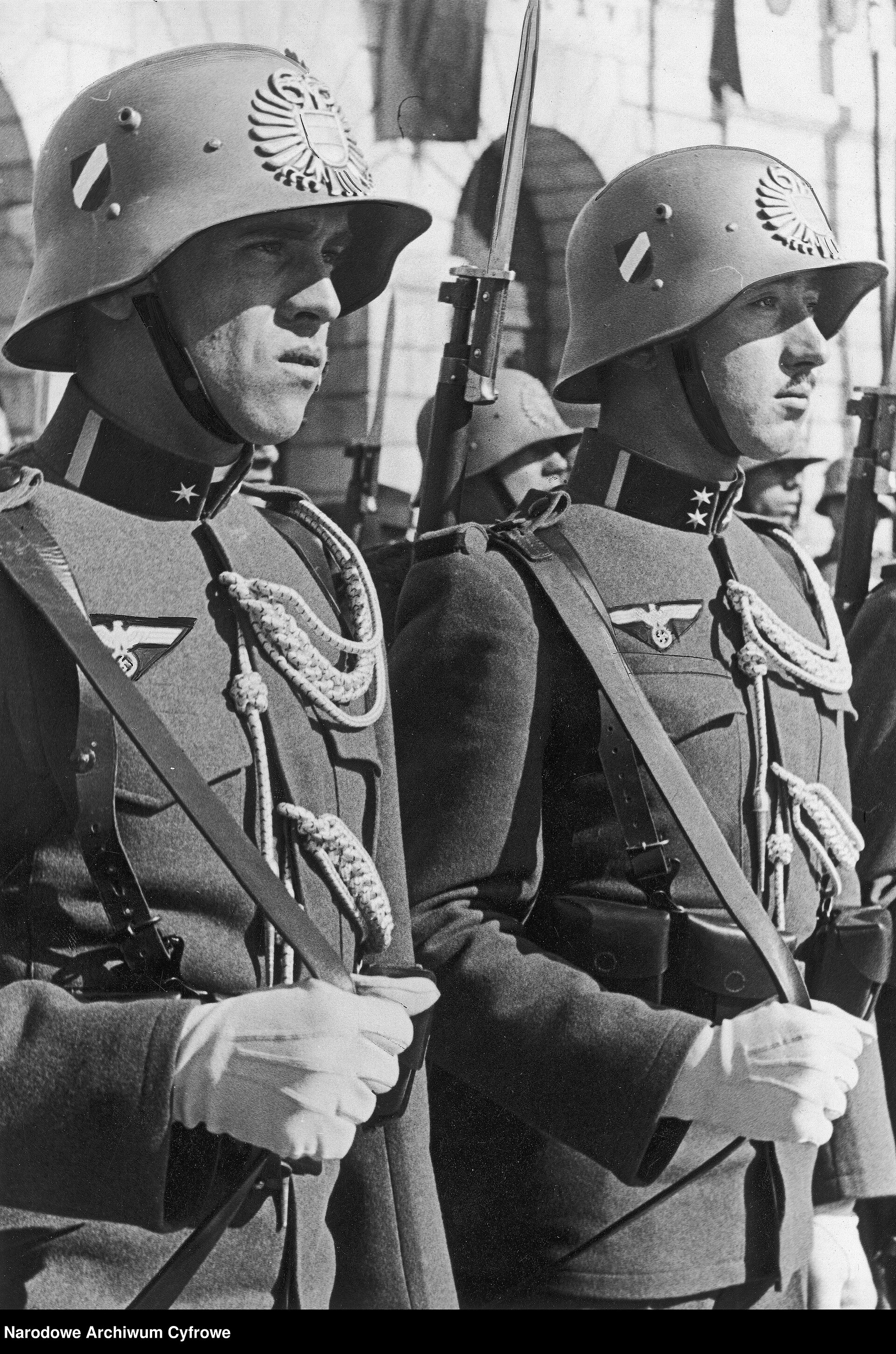
Austria’s debate over military conscription and the structure of its reserve forces has entered a new phase after the government outlined what media coverage describes as a "6+3" compromise — six months of basic military service followed by three months of militia training or refresher periods. The Cabinet’s end‑of‑July decision was reported by ORF and sparked immediate reactions from political parties, defence interest groups and military associations. In this context, Armin Richter, president of the Milizverband Österreich, set out his criticisms in a recent on‑the‑record interview with derStandard (published 26 August 2026).
The broader question is not only about the length of conscription but about how to ensure an operationally credible reserve: one that can be mobilised rapidly and led by an adequate number of trained non‑commissioned officers and officers. Militia organisations have long argued that experience and intensive initial training are necessary to maintain a credible defensive posture; the Milizverband’s public material confirms its preference for an "8+2" model (eight months basic service plus two months militia commitment), a position the association has taken in the Wehrdienstkommission.
- Armin Richter is president of Milizverband Österreich (source: milizverband.at).
- Richter spoke in an interview with derStandard published on 26 August 2026 and said: "Der Grundwehrdienst ist ja kein Ferienlager" and "Der Begriff 'Wehrdienstattraktivierung' tut mir daher 'eigentlich weh'" (source: derStandard, 26.8.2026).
- The government announced a political decision described as a "6+3" package (six months basic service plus three months militia/refresher) at the end of July 2026, reported by ORF.
- The Milizverband publicly supports an 8+2 model and participates in the Wehrdienstkommission (source: milizverband.at).
Richter’s critique in plain terms
In the interview Richter used stark language to make his point: "Der Grundwehrdienst ist ja kein Ferienlager" — translated directly in the published piece as "Basic service is not a holiday camp" — and he criticised the sloganistic language of some reform advocates, saying: "Der Begriff 'Wehrdienstattraktivierung' tut mir daher 'eigentlich weh'". Those phrases articulate a substantive objection: Richter warns that focusing primarily on attractiveness or marketing will not substitute for a sufficiently long and rigorous basic training period.
He places particular emphasis on a functioning leadership structure within the reserve system. According to the interview, the Milizverband fears that shortening conscription time risks producing fewer trained NCOs and officers — an outcome Richter argues would degrade mobilisation and operational readiness. These are assessments he made publicly in the derStandard interview and should be read as his organisation’s perspective rather than an undisputed statistical fact, unless confirmed by official defence publications.
Numbers and verification: what is claimed and what is confirmed
Richter’s interview contains concrete assertions about gaps in cadre personnel and mobilisation targets. DerStandard reproduces those claims as his statements. Independent corroboration is possible: the Milizverband website identifies Richter as its president and provides the association’s positions; earlier reporting (Salzburger Nachrichten, Feb 2026) also recorded the organisation’s push for an eight‑month basic service. The government’s 6+3 compromise has been reported in mainstream media (ORF), but many implementation details — timing of militia blocks, legal changes and budget allocations — remain to be formally published.
For journalists and policy analysts the distinction matters: Richter’s numbers and his descriptions of shortfalls are important for understanding the militia’s assessment, but they require confirmation from Bundesministerium für Landesverteidigung documents (such as the Landesverteidigungsbericht) or official ministry figures to be accepted as objective indicators.
Practical consequences for recruits, readiness and budgets
If the basic service is shortened, the immediate effects will be multi‑dimensional. Training syllabi, drill schedules and the balance between social and combat training aspects would need to be revised. Richter’s argument stresses the military purpose of the basic service — that is, producing personnel ready to assume responsibilities in the reserve structure. A shorter basic phase would mean either more intensive training during the shortened period or greater reliance on subsequent refresher courses.
From a fiscal perspective, longer basic service increases direct training costs but may reduce the frequency and scale of subsequent refresher courses. Conversely, a shorter initial phase could generate recurring follow‑on costs and potentially require monetised incentives to keep reservists engaged. Richter frames his concern in operational terms — the need for a robust baseline of trained cadres — which will feed into budgetary debates in the coming parliamentary cycles.
What remains uncertain and where answers must come from
Several open questions should be clarified: the detailed architecture of the 6+3 proposal (for instance whether the three months are continuous, split over years, or implemented as block trainings), the official figures for current NCO and officer shortfalls, and the ministry’s timeline for rolling out any legislative amendments. Richter’s comments provide an active demand from the militia side for more transparency on these points.
Definitive answers will have to come from the Defence Ministry and from the official defence reports; the Milizverband’s public documents and its participation in the Wehrdienstkommission make clear where the association stands. For media outlets and policymakers, verifying Richter’s numeric claims with ministry data would be the next logical step to move the debate from assertions to documented planning.
Outlook: political friction and policy choices ahead
Richter’s interview has sharpened the public conversation by reframing the debate as a question of operational sufficiency rather than simple attractiveness. Expect counterstatements from the ministry and from political actors who supported the 6+3 compromise. Parliamentary committees and the Wehrdienstkommission will likely host technical hearings where the competing models — 6+3 versus 8+2 or other variants — will be scrutinised.
Ultimately, the issue will hinge on political trade‑offs between manpower quality, financial cost, and the social objectives attached to conscription. Richter’s intervention ensures the militia voice is clearly heard; it now falls to the ministry, the legislature and independent reporting to supply the official numbers and legislative text that will determine whether his warnings are validated or can be addressed through design choices in implementation.
IO SYNTHESIS
THREE-SOURCE ARTICLE ANALYSIS
Armin Richter is president of Milizverband Österreich (source: milizverband.at).
OPEN EVIDENCE ↗Richter spoke in an interview with derStandard published on 26 August 2026 and said: "Der Grundwehrdienst ist ja kein Ferienlager" and "Der Begriff 'Wehrdienstattraktivierung' tut mir daher 'eigentlich weh'" (source: derStandard, 26.8.2026).
OPEN EVIDENCE ↗The government announced a political decision described as a "6+3" package (six months basic service plus three months militia/refresher) at the end of July 2026, reported by ORF.
OPEN EVIDENCE ↗✓ SOURCES AND DOCUMENTS
01 derstandard.at ↗02 derstandard.de ↗03 derstandard.de ↗Sources last checked · 27.08.2026, 01:18This article was written and checked by the ZEITUNG.IO newsroom. It is updated when new verified information becomes available.