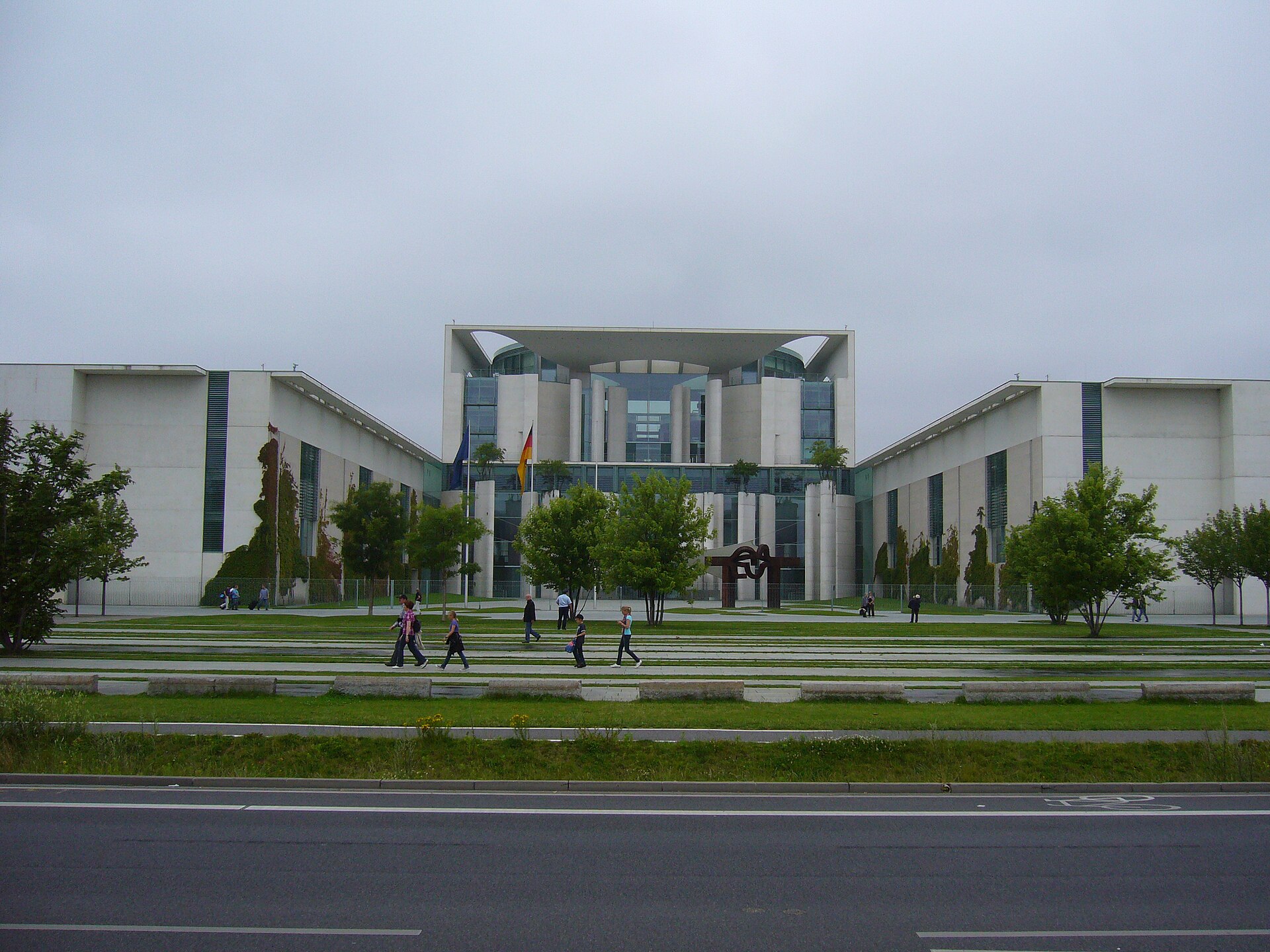
Chancellor Friedrich Merz was the guest on ARD’s Summer Interview, broadcast on 30 August 2026 in the programme slot Bericht aus Berlin and made available in the ARD Mediathek. The interview was conducted by Markus Preiß of the ARD capital studio. ARD issued press information about the programme and the interview was subsequently reported and excerpted by multiple national outlets including Tagesschau, dpa, and the Tagesspiegel.
A succinct line from the interview was picked up and reproduced verbatim across coverage: “Es wird am Ende zusammengezählt.” The phrase was presented by broadcasters and newspapers as a summative remark in which the Chancellor framed the importance of an overall assessment — rather than single data points — in judging his tenure. The Tagesschau published the interview and key excerpts online, providing a primary audiovisual source for the quotation and its context.
The broadcast itself came against a backdrop of media and political attention: low approval ratings reported in opinion polls, public debate about economic conditions, and questions about political leadership. The ARD interview therefore served both as an opportunity for the Chancellor to position himself and as a focal point for public scrutiny.
- Friedrich Merz participated in the ARD Summer Interview on 30 August 2026; the interview was moderated by Markus Preiß (ARD capital studio).
- The programme aired in the Bericht aus Berlin slot and is available in the ARD Mediathek.
- The interview included the line “Es wird am Ende zusammengezählt,” which was reported verbatim by ARD and other outlets.
- ARD‑DeutschlandTrend / Infratest dimap registered Merz’s personal approval at about 16% and satisfaction with the federal government at about 13% in August 2026.
- The interview and its excerpts were reported by Tagesschau, dpa and other national media organizations.
Poll numbers and public sentiment
The interview took place amid low numbers in public opinion polling. According to the ARD‑DeutschlandTrend by Infratest dimap in August 2026, Merz’s personal approval was approximately 16 percent, while satisfaction with the federal government registered near 13 percent. These figures established the immediate political environment in which the Chancellor spoke and were prominently referenced in subsequent media analyses.
Polls are snapshots reflecting public sentiment at a given time and are sensitive to question wording and current events. Still, they are used as benchmarks by political actors and analysts. Single‑digit or lower‑teens percentages for a head of government are generally read as an indicator of increased political vulnerability and can intensify pressure on messaging and policy delivery.
For businesses and markets these numbers are not direct economic metrics, but they contribute to how political risk is assessed. Investors and corporate planners factor in perceived political stability and the government's capacity to implement reforms when forming expectations. Media coverage pointing to weak approval ratings thus feeds into a broader assessment of political climate and policy predictability.
Interpreting “It will be counted up in the end”
Journalists and commentators offered different readings of the Chancellor’s sentence. Some interpreted it as a statement of long‑term orientation: that final judgment of leadership depends on aggregated outcomes rather than short‑term fluctuations in popularity. Others saw it as a rhetorical move aimed at shifting focus away from immediate polling and toward a future comprehensive evaluation — a common political strategy.
From an economic governance perspective, emphasizing a final tally can have mixed consequences. Prioritising long‑term results may justify policies that require time to produce measurable benefits, such as structural reforms or investment programs. Yet when approval ratings are weak, there is also increased pressure to deliver visible short‑term results in areas like inflation control, employment, or energy supply — outcomes that influence public perception more immediately.
The phrase itself is deliberately unspecific: it offers no timeline, no indicators, and no hierarchy of objectives. As such, it functions more as a communicative posture than a programmatic statement. Analysts therefore stressed that the political and economic implications will depend on which concrete measures and metrics the Chancellor’s office and the government subsequently prioritize.
Media response and political signalling
Coverage by dpa and major outlets summarized the interview and highlighted both the quotation and the poll context. The Tagesspiegel and Tagesschau ran analyses and lists of notable lines from the exchange, situating the remarks within an ongoing public debate. These accounts focused less on immediate policy announcements and more on the Chancellor’s framing of political evaluation and accountability.
The verified sources do not extensively document specific reactions from coalition partners or opposition leaders in response to the interview; reporting focused on the interview’s content and its resonance in the press. Media commentary suggested that framing the debate in terms of an eventual ‘tally’ can be a deliberate rhetorical device to de‑emphasize transient setbacks, but the effectiveness of such a device depends on whether the government can produce measurable progress.
For market participants, the signal that matters most is often the combination of rhetoric with credible, concrete policy steps. Communication alone shapes perceptions but is typically weighed against tangible indicators such as fiscal choices, regulatory measures, and macroeconomic data.
Economic implications and remaining uncertainties
The link between a head of government’s popularity and the conduct of economic policy is not linear. Low approval ratings can constrain political capital and make it harder to push through challenging reforms that require sustained consensus. That said, successful economic performance can also restore public confidence and improve approval metrics — the causal relationship runs in both directions.
What will determine outcomes in the coming months are a set of variable factors: the trajectory of domestic growth and inflation, external economic shocks, the coherence of policy within the government, and the capacity to implement reforms effectively. None of these factors are settled by a single television interview. The interview provides a window into rhetorical strategy and public positioning, but the substantive test lies in measurable economic and political developments.
Crucially, the interview leaves open which specific benchmarks the Chancellor believes will form the basis of an ‘end tally’. Without disclosed priorities and measurable targets, the phrase remains a strategic statement rather than an evaluative framework. Observers will therefore be watching subsequent policy initiatives and hard economic data to assess whether the government pursues a long‑term program capable of altering public perception.
Conclusion and what to watch next
The verified facts around the ARD summer interview are clear: it was broadcast on 30 August 2026, moderated by Markus Preiß, and included the line “Es wird am Ende zusammengezählt,” which was widely cited. Those elements provide the factual anchor for broader analysis about political positioning and potential economic consequences.
Going forward, the indicators that will matter for both political and economic assessments include forthcoming polling waves, concrete government measures on economic policy, and real‑time macroeconomic indicators such as GDP growth, inflation trends, and employment data. How the Chancellor and his administration link their policy agenda to measurable results will be decisive in determining whether the ‘end tally’ they invoke alters current public sentiment.
For now, the interview is best read as a strategic communication moment: it clarifies the Chancellor’s public posture but does not substitute for the concrete policy steps and demonstrable outcomes that will shape both political fortunes and economic expectations.
IO SYNTHESIS
THREE-SOURCE ARTICLE ANALYSIS
Friedrich Merz participated in the ARD Summer Interview on 30 August 2026; the interview was moderated by Markus Preiß (ARD capital studio).
OPEN EVIDENCE ↗The programme aired in the Bericht aus Berlin slot and is available in the ARD Mediathek.
OPEN EVIDENCE ↗The interview included the line “Es wird am Ende zusammengezählt,” which was reported verbatim by ARD and other outlets.
OPEN EVIDENCE ↗✓ SOURCES AND DOCUMENTS
01 Tagesschau · Inland ↗02 ard.de ↗03 tagesschau.de ↗Sources last checked · 30.08.2026, 20:42This article was written and checked by the ZEITUNG.IO newsroom. It is updated when new verified information becomes available.