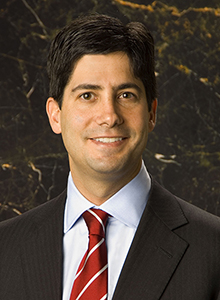
On Friday, 28 August 2026, Federal Reserve Board Chair Kevin M. Warsh is scheduled to deliver remarks that have captured market attention. The speech is part of the Jackson Hole Economic Policy Symposium hosted by the Federal Reserve Bank of Kansas City, taking place from 27 to 29 August in Jackson Hole, Wyoming. The symposium has become a focal point for central bankers, economists and policy-makers to outline assessments of macroeconomic conditions and policy approaches.
The Kansas City Fed lists Warsh on the official programme for the opening session on Friday and announced that his remarks will be streamed at 10:00 a.m. Eastern Daylight Time (8:00 a.m. Mountain Daylight Time). Because Fed communication has an outsized influence on global interest-rate expectations, investors scrutinise the speech for shifts in tone and phrasing. Even subtle changes can alter market pricing of rates, currencies and risk assets.
Several news outlets described the appearance as Warsh’s first significant Jackson Hole address since taking office; Warsh was sworn in as Fed chair on 22 May 2026. Given the prominence of the forum and the timing in his tenure, market participants are particularly attentive to any nuanced change in narrative about inflation, the prospective path of interest rates, or balance-sheet policy.
- Kevin M. Warsh is Chair of the Board of Governors of the Federal Reserve; he was sworn in on 22 May 2026.
- The Jackson Hole Economic Policy Symposium of the Federal Reserve Bank of Kansas City takes place 27–29 August 2026 in Jackson Hole, Wyoming; Warsh is listed in the official agenda for the opening session on 28 August.
- The Kansas City Fed announced Warsh’s remarks will be streamed on 28 August at 10:00 a.m. EDT (8:00 a.m. MDT).
- Multiple media outlets described the speech as Warsh's first major Jackson Hole appearance since becoming Fed chair.
Why Jackson Hole matters to investors
Historically, Jackson Hole speeches have sometimes functioned as turning points in monetary-policy communication. Not all remarks produce market-moving information, but when they do, it is frequently because a speaker signals a re-evaluation of economic outlook or of the central bank’s reaction function. Investors therefore watch for whether the Fed’s rhetoric becomes more or less committed to fighting inflation, whether forward guidance is tightened, or whether there is a clearer timetable for balance-sheet adjustments.
The international transmission of those signals matters. Changes in U.S. policy expectations affect global yields, the dollar, and capital flows. For European markets, a shift toward a more hawkish U.S. stance could lift Treasury yields and the dollar, putting pressure on risk assets and borrowing costs in other regions. Conversely, a softer tone could ease global funding strains and lift risk appetite. The ultimate impact for any given market depends on the exact content of the remarks and on how they are interpreted in the context of local monetary conditions.
What markets are specifically looking for
Market participants are primarily seeking three types of information from Warsh’s speech: the Fed’s current assessment of inflation dynamics, signals about the future path of policy rates (notably whether the concept of a ‘terminal rate’ is being revised), and commentary on balance-sheet strategy. Traders will recalibrate forward-rate curves and option skews based on any meaningful shift in language.
It is important, however, to distinguish between directional hints and formal policy decisions. Major changes in monetary policy are typically enacted through the FOMC process and communicated in scheduled statements and minutes. That said, Jackson Hole can alter expectations by reframing the conversation; historically, even verbal guidance can induce near-term trading moves. Therefore, market reactions should be interpreted in light of subsequent data releases and official FOMC signals.
Warsh’s background and likely rhetorical markers
Kevin M. Warsh brings a technical and market-aware profile to the chairmanship, having served in prior policy and advisory roles. Observers will watch for specific linguistic cues: whether he describes inflation as ‘persistent’ versus ‘transitory’, whether he stresses labour-market imbalances, and how much emphasis he places on external shocks. Such phrases can provide clues about the Fed’s tolerance for inflation overshoots and the speed at which it would adjust policy.
Another critical dimension is communication itself. Market participants will note if Warsh signals a move toward tighter calendar-based guidance, more conditional language tied to particular data thresholds, or continued reliance on discretionary, data-dependent decision-making. Each approach has different implications for market predictability and volatility.
Remaining uncertainties and investor takeaways
Despite the fixed schedule, several uncertainties persist. First, even clear rhetorical shifts do not equate to immediate policy moves; the FOMC remains the formal venue for decisions. Second, markets sometimes over-react to verbal nuance, producing swings that are reversed once the broader data flow and committee communications are factored in. Third, the translation of U.S. signals into European outcomes depends on regional monetary policy differentials and fiscal conditions.
For investors, the practical implication is to integrate Warsh’s remarks into a wider information set — including inflation prints, payroll figures and FOMC minutes — before adjusting strategic allocations. Institutional desks will be watching derivatives markets and cross-currency spreads for real-time feedback, while household investors should be mindful that short-term volatility following the speech may not indicate a lasting regime change. In sum, the Jackson Hole address is likely to be a prompt for re-evaluation rather than a definitive policy turning point.
IO SYNTHESIS
THREE-SOURCE ARTICLE ANALYSIS
Kevin M. Warsh is Chair of the Board of Governors of the Federal Reserve; he was sworn in on 22 May 2026.
OPEN EVIDENCE ↗The Jackson Hole Economic Policy Symposium of the Federal Reserve Bank of Kansas City takes place 27–29 August 2026 in Jackson Hole, Wyoming; Warsh is listed in the official agenda for the opening session on 28 August.
OPEN EVIDENCE ↗The Kansas City Fed announced Warsh’s remarks will be streamed on 28 August at 10:00 a.m. EDT (8:00 a.m. MDT).
OPEN EVIDENCE ↗✓ SOURCES AND DOCUMENTS
01 Tagesschau · Wirtschaft ↗02 axios.com ↗03 axios.com ↗Sources last checked · 28.08.2026, 08:04This article was written and checked by the ZEITUNG.IO newsroom. It is updated when new verified information becomes available.