Researchers Jenna Blyler and Joseph Árvai of the University of Southern California report in a study announced for the journal Risk Analysis (August 2026) that people living closer to the Santa Susana Field Laboratory (SSFL) self‑reported certain chronic diseases at higher rates than residents farther away. The team surveyed 475 residents who lived within roughly 24 kilometres (about 15 miles) of the site and compared responses across distance bands.
The survey results indicate that autoimmune diseases and metabolic or endocrine disorders were more frequently reported by respondents in the vicinity of the facility. For example, autoimmune conditions were reported by 18 percent of those living within about five miles of SSFL, compared with 4 percent among respondents living 11–15 miles away; metabolic or endocrine diseases were reported by 15 percent versus 2 percent in those distance bands. The study also examined protective behaviours such as use of water filters, avoiding gardening, and leaving shoes at the door.
- Study by Jenna Blyler and Joseph Árvai (University of Southern California), announced for Risk Analysis, August 2026.
- Survey of 475 participants living within ~24 km of Santa Susana Field Laboratory found autoimmune disease reported by 18% within ~5 miles vs. 4% at 11–15 miles; metabolic/endocrine disorders 15% vs. 2%.
- Diagnoses were self‑reported and the study is cross‑sectional; authors report associations but do not claim causality.
- Survey also found that protective behaviours (water filters, avoiding gardening) were driven more by perceived risk/anxiety than by perceived self‑efficacy.
Context: the Santa Susana Field Laboratory
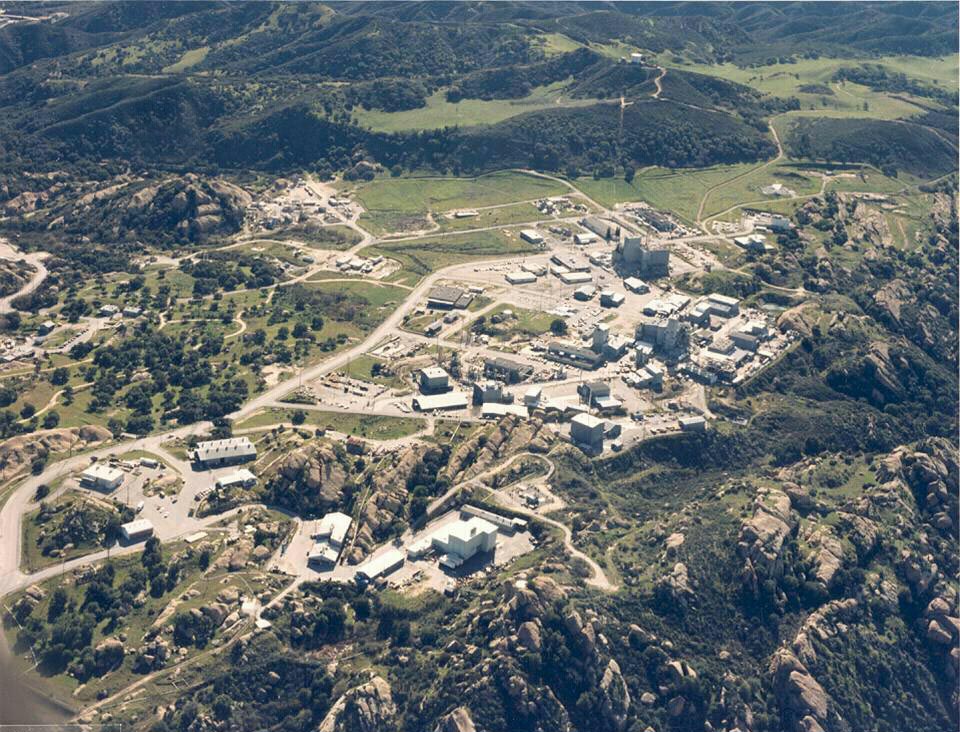
The SSFL, located in Southern California, has a long industrial and research history, including work on experimental reactors and rocket‑engine testing. Operations over decades led to documented contamination incidents that prompted federal and state environmental reviews. Public agencies, including the US Environmental Protection Agency, have long been involved in assessing site contamination and overseeing remediation efforts.
This background—ongoing community concern about residues of past operations, and long-running debates over the extent and pace of cleanup—frames how the new survey is both interpreted by residents and considered by authorities. The study does not operate in a vacuum; it joins years of scientific, regulatory and civic engagement over how to manage the SSFL legacy.
Limits of the evidence
The authors explicitly note critical methodological limitations. Diagnoses reported in the survey are self‑reported and were not verified against medical records. The research is cross‑sectional: data were collected at a single point in time. Cross‑sectional surveys can reveal associations but cannot establish that an exposure caused a health outcome.
The sample of 475 respondents provides a snapshot but is not large enough to draw definitive epidemiological conclusions for the entire impacted population. Potential biases—selection bias, where people who are more concerned may be likelier to take part; or recall bias, where those worried about health or contamination may recall or report diagnoses differently—could affect the observed patterns. The study authors are careful to present their results as suggestive associations rather than proof of causation.
Implications for research and public health action
The patterns observed in the survey nevertheless have public‑health relevance. They underscore the need for more rigorous follow‑up studies that combine clinical verification with environmental and biological measurements. Appropriate next steps would include longitudinal cohort studies, linkage to medical records, biomonitoring for relevant chemical and radiological markers, and systematic environmental sampling across distance gradients to test exposure hypotheses.
Such research could help to identify exposure pathways—drinking water, dust, locally grown food or other routes—and determine whether particular subgroups are disproportionately affected. It would also allow for more precise dose reconstruction efforts and risk assessment modelling, which are necessary to inform targeted interventions and remediation priorities.
Policy and community consequences
For local authorities and federal agencies, the study adds pressure to address community concerns with transparent science and timely action. Residents commonly seek clear information, precautionary measures and, where warranted, remediation and health support services. Historically, debates over the SSFL clean‑up have been contentious and protracted; new evidence, even if preliminary, often intensifies public demand for accountability and accelerated remediation.
If subsequent, more robust studies corroborate links between contamination and disease incidence, policymakers could face calls for expanded cleanup, health screening programs, and compensation mechanisms. Until then, agencies will need to balance the requirement for scientifically defensible evidence with community expectations for precaution and openness.
Uncertainties that remain
Numerous scientific uncertainties persist. The survey cannot specify which contaminants, if any, might be associated with the reported health patterns, through which exposure routes, or over what time frames exposures occurred. It also cannot determine whether the survey sample is representative of the broader population around SSFL. These gaps mean that public‑health decisions cannot be based on the survey alone.
The authors’ transparent discussion of their study’s limits is important: it signals that the findings are a prompt for further inquiry rather than a definitive statement of causality. The appropriate research response is a carefully designed, multi‑disciplinary programme that links clinical, environmental and exposure science to answer the larger questions raised by the survey.
IO SYNTHESIS
THREE-SOURCE ARTICLE ANALYSIS
Study by Jenna Blyler and Joseph Árvai (University of Southern California), announced for Risk Analysis, August 2026.
OPEN EVIDENCE ↗Survey of 475 participants living within ~24 km of Santa Susana Field Laboratory found autoimmune disease reported by 18% within ~5 miles vs. 4% at 11–15 miles; metabolic/endocrine disorders 15% vs. 2%.
OPEN EVIDENCE ↗Diagnoses were self‑reported and the study is cross‑sectional; authors report associations but do not claim causality.
OPEN EVIDENCE ↗✓ SOURCES AND DOCUMENTS
01 derstandard.at ↗02 nepis.epa.gov ↗03 govtribe.com ↗Sources last checked · 27.08.2026, 07:47This article was written and checked by the ZEITUNG.IO newsroom. It is updated when new verified information becomes available.