On 27 August 2026 the Austrian newspaper Die Presse published a recipe in its Sunday supplement that applies a modest technical tweak to a familiar Alpine dish: a sour-cream Schmarrn prepared using the so-called 'sacrificial snow' method. The piece is by Anna Burghardt and was written for the children's page of 'Presse am Sonntag', which helps explain its clear, step-focused tone. The recipe combines traditional components — sour cream, eggs, flour — with a specific approach to whipped egg whites that aims to produce a lighter, airier final texture.
The expression 'sacrificial snow' (Opferschnee) may sound dramatic but denotes a pragmatic operation in pastry work: part of the beaten egg whites is folded into the base mixture first to loosen it up, then the remainder of the meringue is gently folded in. Burghardt explains the technique as a way to moderate batter density and volume while preserving as much of the beaten white’s aeration as possible. For home cooks, this offers a clear method to bridge the gap between a compact batter and a delicately aerated Schmarrn.
- The recipe was published in Die Presse on 27 August 2026 and credited to Anna Burghardt.
- Ingredients listed include: 1 cup sour cream (≈250 g), 5 tablespoons flour, 4–5 tablespoons sugar, a pinch of salt, optional lemon, and 5 eggs (separated).
- Technique: whip egg whites to stiff peaks and use the 'sacrificial snow' method (first fold in part of the whites, then the remainder).
- Baking instructions: oven at 170 °C (top/bottom heat), bake for about 30 minutes; suggested accompaniment is Zwetschkenröster and powdered sugar.
Ingredients and exact specifications
Die Presse lists precise quantities: one cup of sour cream (about 250 grams); five tablespoons of flour; four to five tablespoons of sugar; a generous pinch of salt; and optional lemon for brightness. The recipe calls for separating five eggs, whipping the whites to stiff peaks, and employing the sacrificial-snow technique when combining them with the sour-cream base. These concrete measures are valuable for cooks aiming for reproducibility rather than approximate proportions.
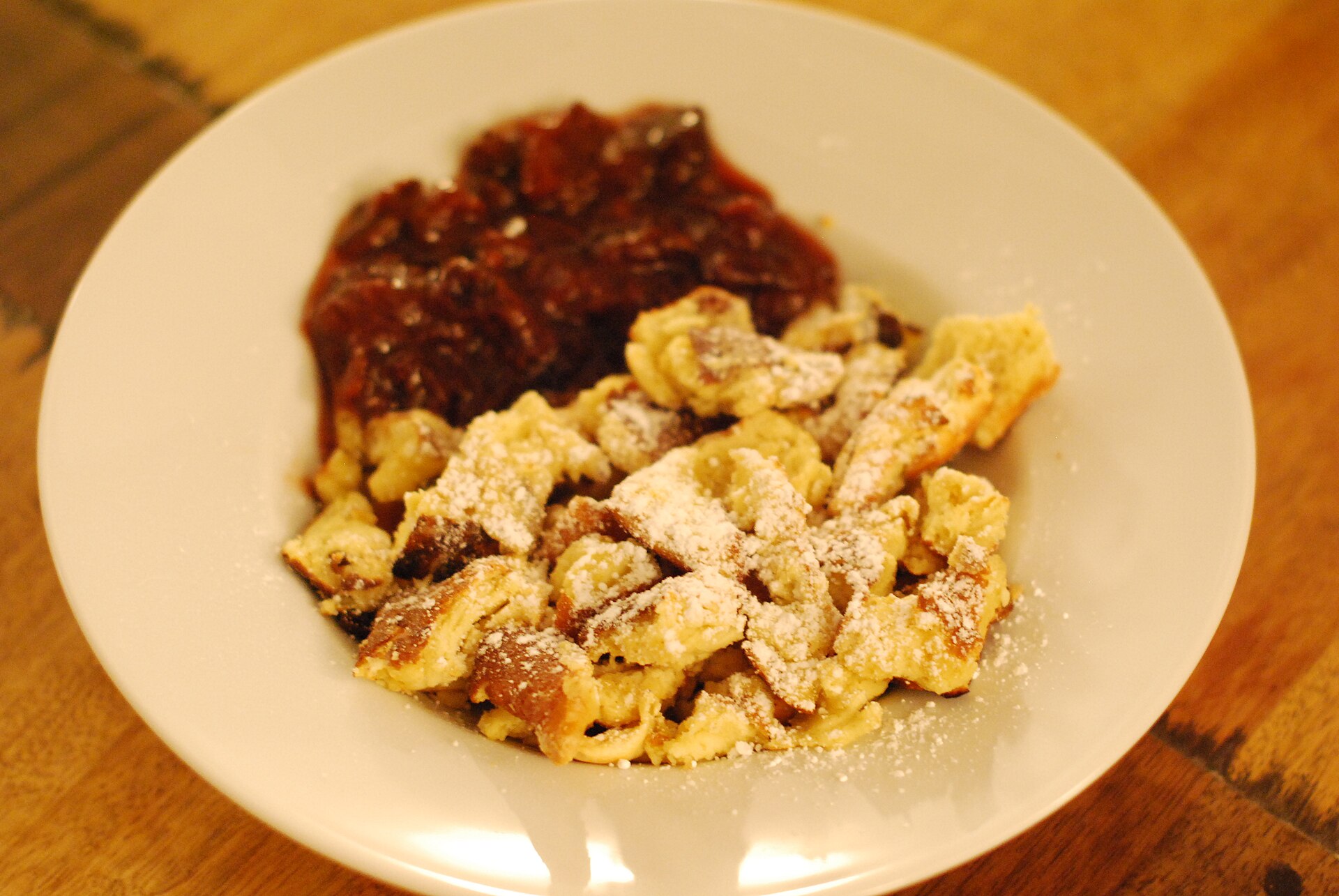
Baking parameters are given: preheat the oven to 170 °C (top and bottom heat), with an estimated baking time of around 30 minutes. As a classic Austrian accompaniment the article suggests Zwetschkenröster (a stewed plum compote) and a dusting of powdered sugar. Including temperature and timing is particularly helpful because a Schmarrn’s texture and coloration depend heavily on oven conditions and the stage at which the batter is transferred to heat.
Execution tips for the home kitchen
Anyone attempting the recipe should take care when separating eggs and ensuring the egg whites are free of fat; any trace of yolk or grease can prevent the whites from reaching stiff peaks. It is also important to gently loosen the sour-cream base with a portion of the beaten whites before folding in the remainder — precisely the moment where the sacrificial-snow technique earns its name. Burghardt’s instructions recommend whisking a small portion of the meringue into the cream mixture first to 'open' it, then carefully folding in the remaining whites with a spatula to preserve air.
The choice of baking dish affects browning and consistency: a shallow, well-heated pan typically leads to an even crust and airy interior. Readers should note that the bake time of roughly 30 minutes is a guideline; actual times will vary by oven model and pan size. The article does not provide alternatives for those who avoid raw egg, so cooks who are concerned about food safety may wish to use pasteurised eggs or other substitutes.
Culinary context and serving suggestions
Schmarrn is a staple across Austria, parts of southern Germany and the Alpine region, appearing in multiple forms from Kaiserschmarrn with raisins to more restrained, cream-forward variations such as the Rahm or Sauerrahmschmarrn. The sour cream in Burghardt’s recipe introduces a mild acidity that balances a richly textured batter. Serving it with Zwetschkenröster — plums cooked down with sugar and spices — is a traditional pairing, creating a sweet-and-tart contrast that complements the Schmarrn’s creaminess.
Other accompaniments could include apple compote, lingonberries or a vanilla sauce, though such alternatives are not mentioned in the piece. The visual contrast between the white meringue and the golden-baked surface can be appealing to children and adults alike, which may explain the recipe’s placement on the children’s page. The format invites modest experimentation, for instance adding a touch of vanilla or using different flours, while keeping the method intact.
What the article provides and what remains unspecified
The Die Presse article supplies key facts: ingredient quantities, oven temperature and duration, and a succinct explanation of the sacrificial-snow technique. The author and date are clearly stated: Anna Burghardt, published 27 August 2026. For cooks this gives a workable framework. At the same time, some operational details are omitted: the precise sequence of steps, the suggested diameter or depth of the baking dish, and adjustments for convection ovens are not addressed — items that experienced bakers might infer but beginners could find helpful.
Nutritional information, allergen alternatives, and specific food-safety guidance for raw eggs are also absent. These gaps do not render the recipe unusable, but they do highlight areas where readers might consult additional sources: manufacturer guidance for ovens, basic food-safety recommendations regarding eggs, or other Schmarrn recipes to compare technique and timing. Overall, the piece offers a compact, clearly defined variant of Rahm Schmarrn that emphasises an accessible technical trick to improve texture.
IO SYNTHESIS
THREE-SOURCE ARTICLE ANALYSIS
The recipe was published in Die Presse on 27 August 2026 and credited to Anna Burghardt.
OPEN EVIDENCE ↗Ingredients listed include: 1 cup sour cream (≈250 g), 5 tablespoons flour, 4–5 tablespoons sugar, a pinch of salt, optional lemon, and 5 eggs (separated).
OPEN EVIDENCE ↗Technique: whip egg whites to stiff peaks and use the 'sacrificial snow' method (first fold in part of the whites, then the remainder).
OPEN EVIDENCE ↗✓ SOURCES AND DOCUMENTS
01 diepresse.com ↗02 diepresse.com ↗03 de.headtopics.com ↗Sources last checked · 27.08.2026, 09:41This article was written and checked by the ZEITUNG.IO newsroom. It is updated when new verified information becomes available.