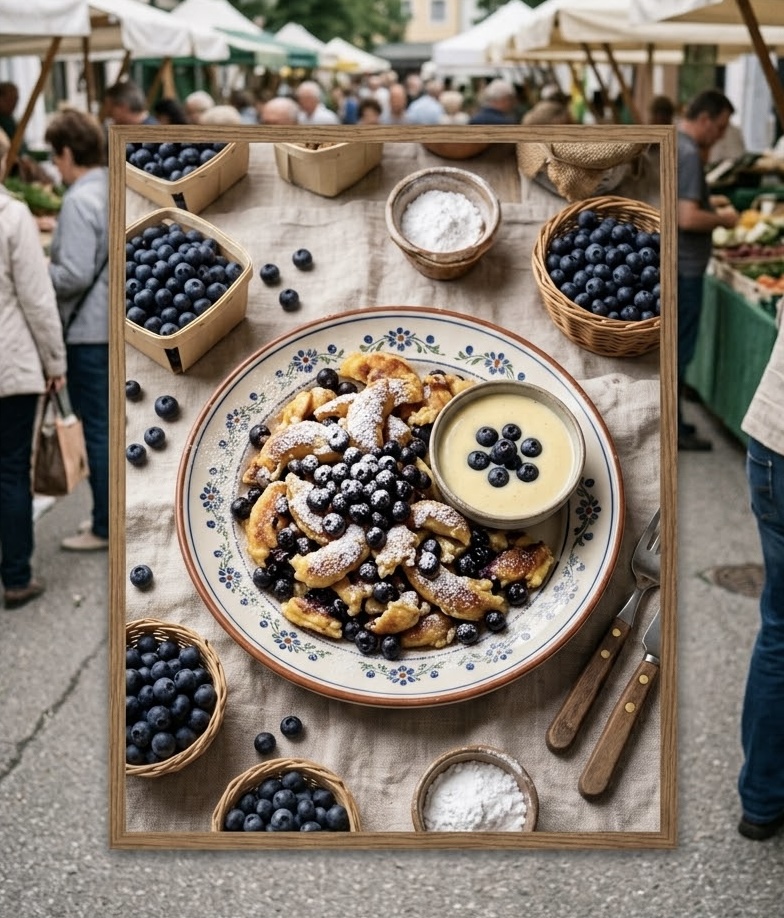
In a column published on 30 August 2026, journalist Tobias Müller writes about buying a bag of wild bilberries at the Bad Ischl weekly market and using them as the central taste element in a recipe for Kipferlschmarrn, a variation of the Austrian shredded pastry dessert. The piece blends a first‑hand market observation with seasonal notes and a recipe proposal; it reads as a culinary column rather than investigative reporting. (Source: derStandard.at)
Müller’s specific detail that he paid roughly €14 per litre for the wild bilberries is given as his personal observation. Such price details are inherently local and time‑specific; while plausible for a regional market sale, this particular figure is an attribution to the author and not independently verified in this review. Local market calendars confirm that the Bad Ischl market was operating in August 2026, making the scene described by the author plausible.
- The article »Kipferlschmarrn mit Schwarzbeeren« was published by Tobias Müller on 30 August 2026 on derStandard.at.
- Wild bilberries (Vaccinium myrtillus), locally called Schwarzbeeren, are typically in season in Central Europe in July–August.
- The author reports buying Schwarzbeeren at the Bad Ischl weekly market for about €14 per litre (author's account).
- Statistik Austria reported increased fruit and berry harvest volumes for 2025 compared with 2024, indicating a good beeryear.
What Schwarzbeeren are and when they appear
The term Schwarzbeeren is used in parts of Austria—especially in the west—to refer to wild bilberries, the species Vaccinium myrtillus. These are distinct from cultivated blueberries: they are typically smaller, darker (often deep blue to almost black), have thinner skins and a more concentrated flavour profile. In Central Europe the bilberry season generally peaks in July and August and may extend into September in some years. Retail seasonal calendars and specialty supplier guidance align with this timing.
The author highlights the sensory difference between wild and cultivated berries: forest bilberries tend to present higher acidity and a more intense, concentrated fruitiness. This is not merely literary flourish; varietal differences in sugar and acid composition and in skin thickness affect both taste and the behaviour of the fruit in cooking. The exact sensory profile will vary by microclimate, harvest date and year.
Price signals and the context of 2025
Müller recalls 2025 as a particularly abundant year for bilberries and suggests that wild berries were, at times, cheaper than cultivated blueberries in Vienna markets that year. Official harvest data lend partial support to the broader seasonal story: Statistik Austria reported increased fruit and berry harvest volumes for 2025 compared with the previous year, indicating a strong season in parts of Austria. Such higher yields can have downward pressure on prices in some market channels.
However, the specific claim that wild bilberries in 2025 were generally cheaper than cultivated blueberries in Vienna is not demonstrably supported by the public statistics we examined. Nationwide or metropolitan price comparisons for that precise commodity mix and year are not available in the reviewed sources. Therefore Müller's price‑comparison remark should be read as his assessment, informed by memory and experience, rather than a fully corroborated market fact.
Culinary implications: why chefs and home cooks value wild bilberries
Wild bilberries are prized by cooks because their concentrated flavour can provide a clear, recognisable note in both sweet and savoury dishes. In a warm dessert like Kipferlschmarrn, the bilberries' acidity cuts through richness and their darker colour gives a striking visual contrast. Their lower juiciness compared with many cultivated blueberries means compotes or reductions may require less thickening, and the structure of the fruit can better withstand gentle folding into batters.
The column positions the dessert as an example of regional, seasonal cooking—using locally sourced ingredients to accentuate place. This is a current theme in European gastronomy: smaller producers and foragers supply chefs and niche market stalls with ingredients that offer unique taste qualities. However, such supply remains patchy and highly dependent on annual yields, logistics and the choices of market vendors.
Sustainability, collecting rights and food safety
Buying or foraging wild bilberries raises legal and ecological considerations. In Austria, casual berry collecting for personal use is often tolerated, but protected areas and private land can place limits on foraging. The column does not purport to be a foraging guide; Müller reports a purchase at a market, so questions of land access are not directly addressed in his text.
Food safety is also relevant. Wild fruits can carry environmental residues or be contaminated if collected close to traffic or polluted sites; they can also be confused with other berries by inexperienced pickers. Market vendors must comply with food‑sale regulations, but this review did not verify the hygiene or sourcing practices of any individual stall. For consumers, careful washing and, when appropriate, cooking or preserving, remain sensible precautions.
Established facts and open questions
To summarise the verified picture: Tobias Müller's column exists (published 30 August 2026) and reports a market purchase of wild bilberries in Bad Ischl; the fruits referred to as Schwarzbeeren correspond to Vaccinium myrtillus and are in season in July–August in Central Europe. Official harvest statistics show 2025 was a strong year for fruit and berries in Austria, which supports the column's broader seasonal framing. (Sources: derStandard.at, Statistik Austria, seasonal retail calendars)
What remains unverified in the public record is the specific market‑wide pricing claim: while Müller reports paying about €14 per litre at the Bad Ischl market and characterises 2025 as a year when wild berries could be cheaper than cultivated ones in Vienna, comprehensive price data to corroborate that generalisation were not found in the sources checked. A follow‑up for a journalistic piece could include direct queries to the author about the vendor or to market authorities for contemporaneous price lists, and searches for archived market price records for 2025 and 2026.
IO SYNTHESIS
THREE-SOURCE ARTICLE ANALYSIS
The article »Kipferlschmarrn mit Schwarzbeeren« was published by Tobias Müller on 30 August 2026 on derStandard.at.
OPEN EVIDENCE ↗Wild bilberries (Vaccinium myrtillus), locally called Schwarzbeeren, are typically in season in Central Europe in July–August.
OPEN EVIDENCE ↗The author reports buying Schwarzbeeren at the Bad Ischl weekly market for about €14 per litre (author's account).
OPEN EVIDENCE ↗✓ SOURCES AND DOCUMENTS
01 derstandard.at ↗02 salzkammergut.at ↗03 badischl.salzkammergut.at ↗Sources last checked · 30.08.2026, 21:09This article was written and checked by the ZEITUNG.IO newsroom. It is updated when new verified information becomes available.