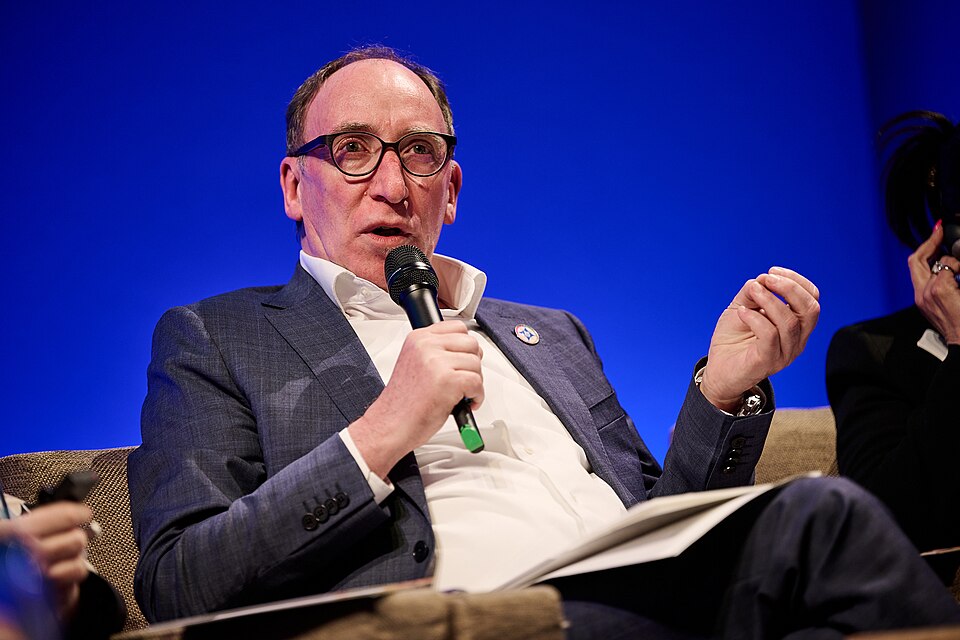
On 29 August 2026 DiePresse published an extensive profile entitled „Johannes Rauch, der grüne Gemeindestratege“. Rather than depicting Rauch as a high-profile capital-city politician, the piece emphasizes his ties to municipal politics and his role in building organisational capacities at the local level. The portrayal highlights a form of political work that is often less visible in national headlines: training, network-building and the slow institutional work of party-building in municipalities.
The profile functions as more than a personality sketch; it reads as an account of a deliberate strategic choice by a political formation to invest in local infrastructure. In European party systems facing declining membership and more fragmented electorates, such an approach — prioritising durable educational and organizational structures — is a recognised response. DiePresse places Rauch within this logic, presenting him as one of the internal actors who operationalise it.
- DiePresse published a profile titled "Johannes Rauch, der grüne Gemeindestratege" on 29 August 2026 (diepresse.com).
- The portrait describes Johannes Rauch as head of a Green party academy (diepresse.com).
- Other Austrian media such as news.at and DerStandard have recently reported on prominent Green figures, including Leonore Gewessler, indicating ongoing media debate about the party (news.at, derstandard.de).
Rauch’s role: leading a party academy
A central fact of the portrait is the attribution that Johannes Rauch serves as the head of a Green party academy. Party academies typically perform several functions: political education, skills training for elected officials, the development of policy expertise, and the maintenance of networks between local branches and higher levels of the party.
DiePresse stresses that this role is organisational rather than media-facing. Leaders of such institutions shape the quality of local representation over the long term through workshops on municipal law, training in mediation and governance, and by transmitting internal strategic priorities. The profile does not provide granular detail on curricula or explicit performance targets, however, so the description remains organisational in nature rather than programmatic.
Why municipal rooting matters for the Greens
Focusing on municipal structures is not an escape from national politics but a strategic response to structural pressures: reduced party membership, more diverse electorates, and the growing salience of local issues. By placing people like Rauch in charge of institutions that systematically develop municipal capacities, the Greens are investing in visibility and operational competence at the grassroots.
For voters, such investments have a twofold effect. They can improve the delivery and quality of public services at the local level when elected officials are better trained. They can also increase the chance of retaining voters across different demographic groups by demonstrating competence in everyday governance tasks — a dimension that can be crucial for translating issue-based support into sustained electoral backing.
Institutional potential and limits
Party academies carry institutional potential but also face limits. They can professionalise party actors, set standards and circulate policy toolkits. Their effectiveness, however, depends on resource allocation within the party: funding, staffing and access to experts are decisive for the scale and impact of training programmes.
DiePresse’s portrait notes Rauch’s leadership role but does not provide details on budgets, staffing levels or specific outcomes. As a result, it remains open how far-reaching the academy’s influence is and whether it can produce substantive organisational change across all regions where the Greens are active.
The broader media context
The profile comes amid wider media attention to Green figures in Austria. Outlets such as news.at and DerStandard have recently covered prominent Green politicians, including Leonore Gewessler. That coverage suggests ongoing public discussion about personnel and strategic direction within the party, not limited to ideological debates but extending to questions of capacity and leadership.
Seen in this light, DiePresse’s portrait contributes to a larger conversation about how parties can maintain relevance: whether through charismatic leadership, programmatic innovation, or institutional strengthening at the local level. The academy model emphasised in the portrait is one such instrument, though by itself it does not resolve trade-offs between programme and organisation.
What is known — and what remains uncertain
From the available reporting the following points are clear: DiePresse published the portrait on 29 August 2026; the article presents Johannes Rauch as a Green municipal strategist and links him to the leadership of a party academy. Other Austrian media outlets have also been reporting on prominent Green figures, indicating sustained media interest in the party’s internal and public dynamics.
What the current sources do not clarify is the operational detail behind the academy: precise educational offers, measurable outcomes, budgetary scope and the extent of its reach within the party’s regional networks. Additionally, it is not yet possible to assess whether strengthening municipal capacities through such an institution will translate into measurable electoral gains or programmatic renewal. Answering these questions would require access to internal documents, budgets and longitudinal impact assessments, which are not available in the public reporting so far.
IO SYNTHESIS
THREE-SOURCE ARTICLE ANALYSIS
DiePresse published a profile titled "Johannes Rauch, der grüne Gemeindestratege" on 29 August 2026 (diepresse.com).
OPEN EVIDENCE ↗The portrait describes Johannes Rauch as head of a Green party academy (diepresse.com).
OPEN EVIDENCE ↗Other Austrian media such as news.at and DerStandard have recently reported on prominent Green figures, including Leonore Gewessler, indicating ongoing media debate about the party (news.at, derstandard.de).
OPEN EVIDENCE ↗✓ SOURCES AND DOCUMENTS
01 diepresse.com ↗02 news.at ↗03 derstandard.de ↗Sources last checked · 29.08.2026, 08:33This article was written and checked by the ZEITUNG.IO newsroom. It is updated when new verified information becomes available.