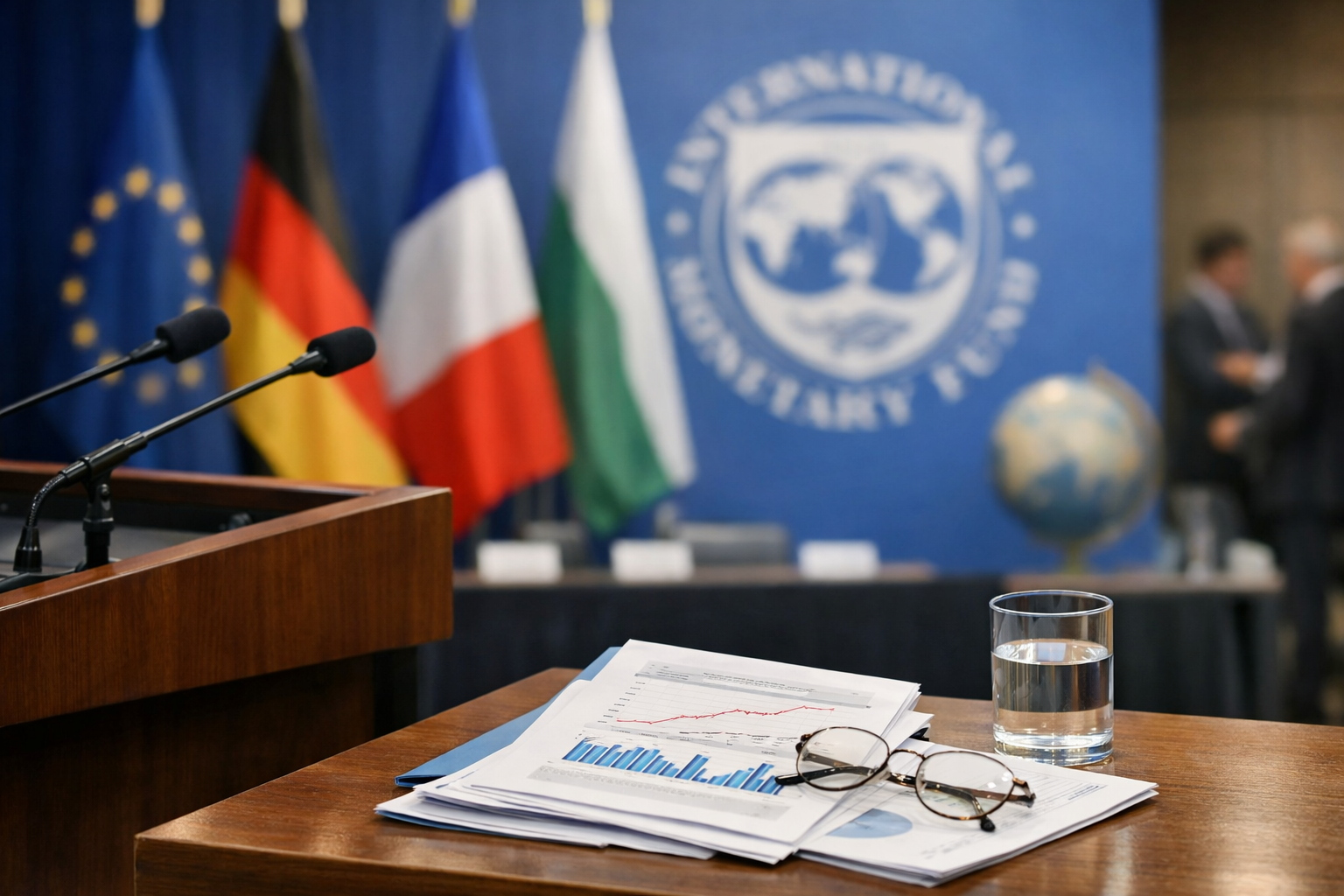
International Monetary Fund Managing Director Kristalina Georgieva said in a briefing ahead of the G20 finance ministers’ meeting in Asheville, North Carolina, that the global economy "has weathered the Iran war energy shock better than feared," according to reports from international wire services. Her comments were reported on August 25, 2026, and were reiterated in subsequent coverage.
At the same time, Georgieva cautioned — again as reported by news agencies — that the shock is not over and that mounting fiscal pressures and rising sovereign bond yields represent meaningful risks. Those formulations reflect the IMF leadership’s view that a combination of temporary supply and demand responses has so far limited the fallout, but material downside risks remain.
- Kristalina Georgieva is Managing Director of the International Monetary Fund (IMF).
- Georgieva told reporters at a briefing on August 25, 2026, in Asheville that the global economy "has weathered the Iran war energy shock better than feared" and cautioned that "the energy shock is not over," according to wire services.
- The IMF's World Economic Outlook update from July 2026 projects global growth of about 3.0 percent for 2026.
Channels that limited the immediate damage
The IMF and contemporaneous Reuters and Associated Press accounts identify several mechanisms that have helped dampen the initial impact of the energy shock. Notable among them are drawdowns from strategic petroleum reserves and commercial stocks, increased production outside Gulf producers, and a reduction in energy demand in some regions. A partial shift toward other fuels, including coal in some markets, and faster deployment of renewables also mitigated immediate supply constraints.
These mitigating forces were described alongside offsetting growth impulses, notably higher investment in artificial intelligence (AI), which IMF officials — via news reports — framed as one of the growth tailwinds competing with the energy supply shock. The net effect, according to IMF staff analysis published in the World Economic Outlook (WEO) update, is that global activity has not collapsed in the way more severe scenarios had projected.
Fiscal strains and the rising cost of borrowing
Despite the better‑than‑expected outcome so far, the IMF leadership highlighted vulnerabilities tied to fiscal positions and financial conditions. Georgieva warned, as reported, about rising sovereign bond yields that can elevate refinancing costs for governments and companies and squeeze fiscal space where debt levels are already high. That warning is consistent with the IWF’s broader advice on balancing near‑term support with medium‑term debt sustainability.
For countries with fragile public finances or limited market access, higher yields can translate into sharper constraints on budgets and policy responses. The IMF’s caution therefore underscores the policy trade‑offs that authorities face: the need to support economies where necessary versus the imperative to preserve confidence in public finances.
Regional consequences and winners and losers
Regionally, the IMF assessment implies differentiated effects. In advanced economies, lower energy prices and stock releases have eased inflationary pressure in the near term, but countries with large public debts or structural imbalances could still be exposed to rising yields. In Europe, the combination of easing energy costs and potential increases in borrowing costs is a central policy dilemma.
Emerging markets show heterogeneous outcomes. Energy exporters may gain from higher prices but face heightened volatility and financing risks; importers with weak reserves are more vulnerable to renewed supply shocks. The IMF’s staff analysis signals that country‑specific conditions — reserve buffers, debt maturity profiles and the composition of spending — will determine resilience.
What the official forecasts say
The IMF’s World Economic Outlook update from July 2026, which Georgieva referenced in post‑briefing commentary, projects global growth at about 3.0 percent for 2026. That projection serves as the institutional baseline for assessing the macroeconomic implications of the Iran conflict and related energy disruptions. The WEO contains scenario analysis that outlines how prolonged disruptions in the Strait of Hormuz or other supply channels could deepen downside risks.
It is important to note that the remarks reported from the August 25 briefing were commentary by the IMF Managing Director and draw on staff analysis rather than representing a formal revision of WEO numbers. The official IMF projections remain documented in the WEO publication.
Uncertainties that remain
Several uncertainties persist that could flip the current outlook. The duration and severity of disruptions to shipping lanes and Gulf exports are central unknowns, as is the future path of global energy demand. Another variable is the speed and scale of investment in renewable energy and the degree to which that can substitute for hydrocarbon supplies in the near‑term.
Additionally, there is a methodological caveat: the precise wording and full transcript of Georgieva’s August 25 briefing are not posted as a verbatim record on the IMF website according to available searches; the quotations and paraphrases in international reporting are based on journalists’ accounts at the event. For exact phrasing, one would need the official IMF briefing record or audiovisual material from the IMF press office.
Policy implications and outlook
From a policy perspective the IMF’s assessment points to several priorities. Governments should shore up fiscal buffers where possible and target support to vulnerable households and firms while avoiding measures that would jeopardize long‑term debt sustainability. Central banks must weigh inflation dynamics alongside financial market developments, particularly the impact of rising yields on growth and sovereign spreads.
Finally, the IMF’s message underscores the value of diversification of energy supply and stronger resilience planning. While the short‑term picture looks less dire than earlier fears, the Fund’s warnings about fiscal pressures and the possibility of renewed energy shocks argue for cautious and forward‑looking policy design to limit downside risks and preserve room for manoeuvre.
IO SYNTHESIS
THREE-SOURCE ARTICLE ANALYSIS
Kristalina Georgieva is Managing Director of the International Monetary Fund (IMF).
OPEN EVIDENCE ↗Georgieva told reporters at a briefing on August 25, 2026, in Asheville that the global economy "has weathered the Iran war energy shock better than feared" and cautioned that "the energy shock is not over," according to wire services.
OPEN EVIDENCE ↗The IMF's World Economic Outlook update from July 2026 projects global growth of about 3.0 percent for 2026.
OPEN EVIDENCE ↗✓ SOURCES AND DOCUMENTS
01 tagesschau.de ↗02 tagesschau.de ↗03 ca.investing.com ↗Sources last checked · 26.08.2026, 12:15This article was written and checked by the ZEITUNG.IO newsroom. It is updated when new verified information becomes available.