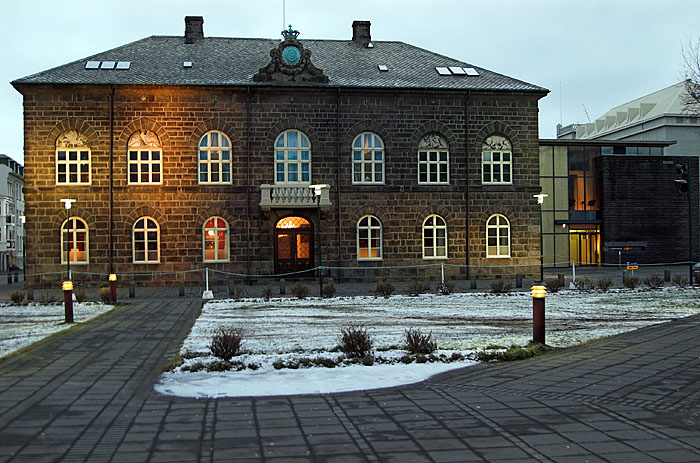
Icelanders will go to the polls on 29 August 2026 to decide whether their country should resume accession negotiations with the European Union. The date was published on the official government portal island.is; the referendum was proposed by the Icelandic government on 6 March 2026 and subsequently set in motion by a resolution of the Althingi later in May 2026. The process is therefore the result of a domestic political decision that moved through administrative and parliamentary channels.
Crucially, the referendum asks a narrowly defined procedural question: should Iceland reopen accession talks with the EU? It does not constitute a direct vote on membership. Any future accession agreement would require additional negotiations, legislative steps and ratification at national and EU levels, and could itself be subject to further popular ratification depending on Icelandic political decisions. The distinction between authorising negotiations and approving accession is central to understanding both the limits and the implications of the upcoming vote.
- The Icelandic referendum is scheduled for 29 August 2026 (source: island.is).
- The vote asks whether Iceland should resume accession negotiations with the European Union; it is a vote to reopen talks, not to join immediately (source: RÚV).
- The government proposed the referendum on 6 March 2026; the Althingi adopted the measure in subsequent parliamentary steps in late May 2026 (source: mfa.is).
What voters will actually decide
The ballot poses a clear binary choice: yes or no to resuming EU accession talks. A 'yes' would give Reykjavik a political mandate to open talks and set a negotiating agenda; a 'no' would foreclose a new round of accession negotiations for the foreseeable future. This procedural framing means the referendum determines whether the political instruments to negotiate are activated, not the final outcome of those talks.
From an administrative perspective, a positive vote would trigger government-to-government negotiations, the drawing up of an official negotiating mandate, and likely protracted discussions about key sectors. A negative vote would leave Iceland's current relations with the EU intact but would also close the door on a defined path toward membership — at least until political circumstances change. Either outcome leaves complex technical relationships — on trade, research cooperation, and other policy areas — to continue under existing arrangements.
Domestic politics and motivations
The referendum reflects a long-standing ambivalence in Icelandic politics. Following the financial crisis a decade and more ago, Iceland briefly pursued EU accession amid extreme economic turmoil, but public and political opinion later shifted against a full membership push. The government's decision to propose the referendum is framed by proponents as a response to altered European conditions and potential economic advantages of closer ties, including market access and regulatory alignment.
Opponents, however, remain concentrated around core policy concerns: fisheries policy is the most prominent. Fishing rights and the regulation of marine resources are central to Iceland’s economy and identity, and many fear EU rules could constrain national control. Other topics in domestic debate include sovereignty over natural resources, social policy compatibility, and the distributional effects of regulatory harmonisation. Political parties and civic organisations have mobilised on both sides, producing an intensely contested debate in the run-up to the vote.
European and geopolitical implications
For the European Union the referendum carries both symbolic and practical significance. A 'yes' would reopen the question of Iceland as a potential member state, obliging the EU to consider how to structure negotiations and what concessions or special arrangements might be acceptable — particularly in fisheries. A 'no' would not necessarily damage bilateral relations, but it would remove the prospect of membership and could influence how the EU engages with small, resource-rich states at its periphery.
Strategically, Iceland’s location in the North Atlantic and its NATO membership give it an outsized geopolitical profile relative to its population. Greater EU integration would recalibrate some of those relationships — not least in areas where EU policy intersects with NATO responsibilities, trade routes and environmental governance in the Arctic. Brussels will be watching closely, and EU institutions have already indicated they would engage in preparatory discussions if Reykjavik authorised negotiations.
Uncertainties and plausible post-referendum scenarios
Several important uncertainties remain. Even if voters endorse resuming talks, substantive questions about duration, scope, and trade-offs will determine whether negotiations progress to an actual accession bid. Sectors such as fisheries raise potential deal-breakers that could prolong or complicate talks. Moreover, internal politics in Iceland — the balance of power in parliament, public mobilisation and potential government changes — will influence the practical trajectory after the vote.
Possible outcomes range from a protracted negotiating process in which Iceland secures sectoral exceptions, to a stalemate that reinforces the status quo and prompts Reykjavik to pursue alternative, bilateral arrangements with the EU. A negative vote would likely shift focus to deepening pragmatic cooperation outside accession — through trade agreements or sectoral partnerships. How member states of the EU themselves react, and whether they are willing to open flexible formats for accession, will also shape the medium-term outlook. In short, the referendum is a procedural gateway whose long-term consequences will depend on a series of technical and political decisions that follow the ballot.
IO SYNTHESIS
THREE-SOURCE ARTICLE ANALYSIS
The Icelandic referendum is scheduled for 29 August 2026 (source: island.is).
OPEN EVIDENCE ↗The vote asks whether Iceland should resume accession negotiations with the European Union; it is a vote to reopen talks, not to join immediately (source: RÚV).
OPEN EVIDENCE ↗The government proposed the referendum on 6 March 2026; the Althingi adopted the measure in subsequent parliamentary steps in late May 2026 (source: mfa.is).
OPEN EVIDENCE ↗✓ SOURCES AND DOCUMENTS
01 diepresse.com ↗02 apnews.com ↗03 diepresse.com ↗Sources last checked · 27.08.2026, 16:07This article was written and checked by the ZEITUNG.IO newsroom. It is updated when new verified information becomes available.