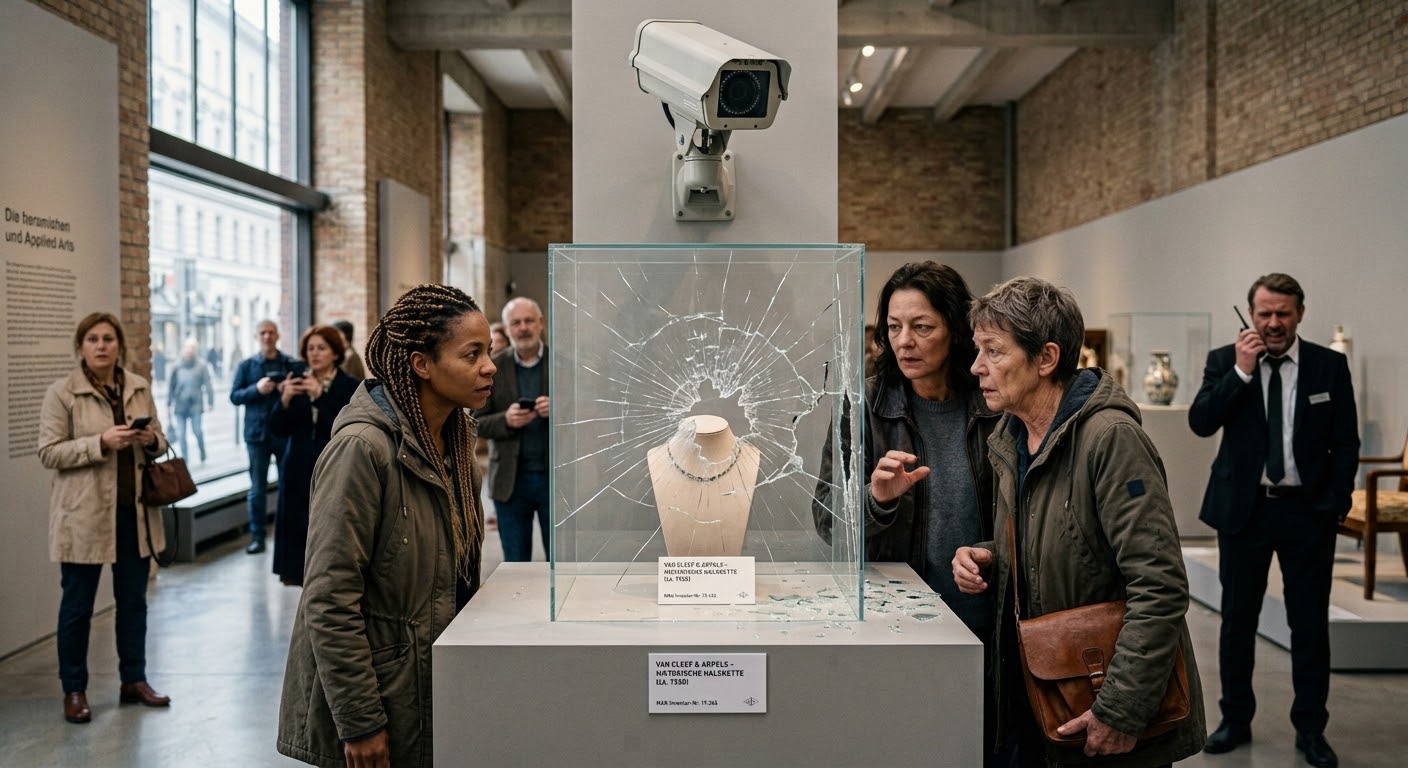
According to multiple Spanish media reports, burglars forced entry to the Museo de Villena (MUVI) overnight into 27 August 2026 and removed the collection known as the Tesoro de Villena. Local outlets state the museum alarm was triggered at around 05:20–05:26 and that officers arrived at the scene within minutes, though official statements have been limited, as noted by RTVE and ORF.
The Guardia Civil has taken charge of the investigation, with judicial police units reportedly involved. Early reporting from regional agencies such as Europa Press indicates investigators are examining evidence at the museum and pursuing lines of inquiry that suggest several individuals acting in multiple vehicles may have been involved. There has been no definitive public disclosure of how the perpetrators bypassed security measures or whether any items suffered damage during removal.
- In the early hours of 27 August 2026 the Tesoro de Villena was stolen from the Museo de Villena.
- Media reports say the museum alarm sounded at about 05:20–05:26 and officers arrived minutes later.
- The Guardia Civil (Policía Judicial) is leading the investigation; initial reports suggest multiple perpetrators and vehicles.
Cultural and scientific importance of the Tesoro
The Tesoro de Villena is widely described in the press as among the most significant Bronze Age finds in Europe. Its importance goes beyond monetary value: the collection provides key insights into metallurgical techniques, trade networks and social structures of prehistoric communities. Losing access to such objects is therefore a major blow to both local heritage and international scholarship.
Museal context matters: items displayed and conserved within a museum setting carry layers of documentation—restoration reports, provenance files and display histories—that are essential for research. If the artifacts are dispersed or destroyed, these scientific opportunities are profoundly diminished and, in many cases, irrecoverably lost.
Investigation: what is known and unknown
What is publicly known at this stage is limited: law enforcement attended the site shortly after the alarm, and the Guardia Civil is handling the inquiry. Media sources report possible involvement of several perpetrators and vehicles, but do not provide corroborated forensic details. It is unclear whether the perpetrators used tools to disable cameras or alarms, or whether those systems functioned as intended and were circumvented by other means.
Key open questions remain: are there usable forensic traces such as fingerprints, DNA or surveillance footage; have items been identified via published records; and is there coordination with national or international heritage-protection agencies? The answers will depend on the pace and scope of the ongoing criminal investigation and on decisions about public communication by authorities.
The challenge of recovering stolen antiquities
Recovering valuable antiquities is notoriously difficult. Once removed from a public setting, objects may be concealed in private collections, offered through opaque markets or even melted down for raw materials. The international trade in looted cultural goods often involves complex laundering mechanisms: false provenances, intermediaries and sales in jurisdictions with weak regulation.
That said, the Tesoro de Villena’s prominence can be an advantage. Detailed catalogues, photographs and scholarly publications make its pieces identifiable to specialists, which can aid recovery efforts. High-profile thefts also tend to mobilise resources—ranging from national police art crime units to Interpol alerts—and raise public and institutional pressure for restitution.
Local and wider repercussions
For MUVI, the theft is both an immediate loss and a reputational problem. Smaller municipal museums often operate with constrained budgets for personnel and security upgrades; a high-profile burglary is likely to provoke scrutiny of those arrangements and demands for reinforced protection. For the town of Villena and its cultural economy, the removal of a main attraction risks reduced visitor numbers and diminished cultural prestige.
Nationally, the incident could prompt debates about resource allocation for heritage protection, particularly for regional museums holding items of international importance. Political responses may include emergency funding, tighter regulations on the trade in antiquities, or enhanced cooperation between museums and law enforcement. Practical outcomes, however, will depend on political will and budgetary choices that follow the investigation.
Outlook and next steps
In the short term, the Guardia Civil’s inquiries will determine what evidence exists and whether arrests or recoveries are possible. Public dissemination of specifics—images of missing items, timelines, and appeals for witnesses—might follow to assist identification and tip lines. International coordination with organisations that monitor cultural property could also be expected if investigators deem it necessary.
Longer-term, the case will test mechanisms for protecting and recovering cultural heritage. Precedents exist for successful recoveries, but they often require persistent cross-border work and cooperation among museums, police forces and international agencies. Until investigators release substantive findings, many factual details of the theft remain unresolved; the coming days and weeks will show how intensively authorities can pursue leads and whether any of the stolen items can be recovered.
IO SYNTHESIS
THREE-SOURCE ARTICLE ANALYSIS
In the early hours of 27 August 2026 the Tesoro de Villena was stolen from the Museo de Villena.
OPEN EVIDENCE ↗Media reports say the museum alarm sounded at about 05:20–05:26 and officers arrived minutes later.
OPEN EVIDENCE ↗The Guardia Civil (Policía Judicial) is leading the investigation; initial reports suggest multiple perpetrators and vehicles.
OPEN EVIDENCE ↗✓ SOURCES AND DOCUMENTS
01 ORF · News ↗02 elpais.com ↗03 rtve.es ↗Sources last checked · 27.08.2026, 18:03This article was written and checked by the ZEITUNG.IO newsroom. It is updated when new verified information becomes available.