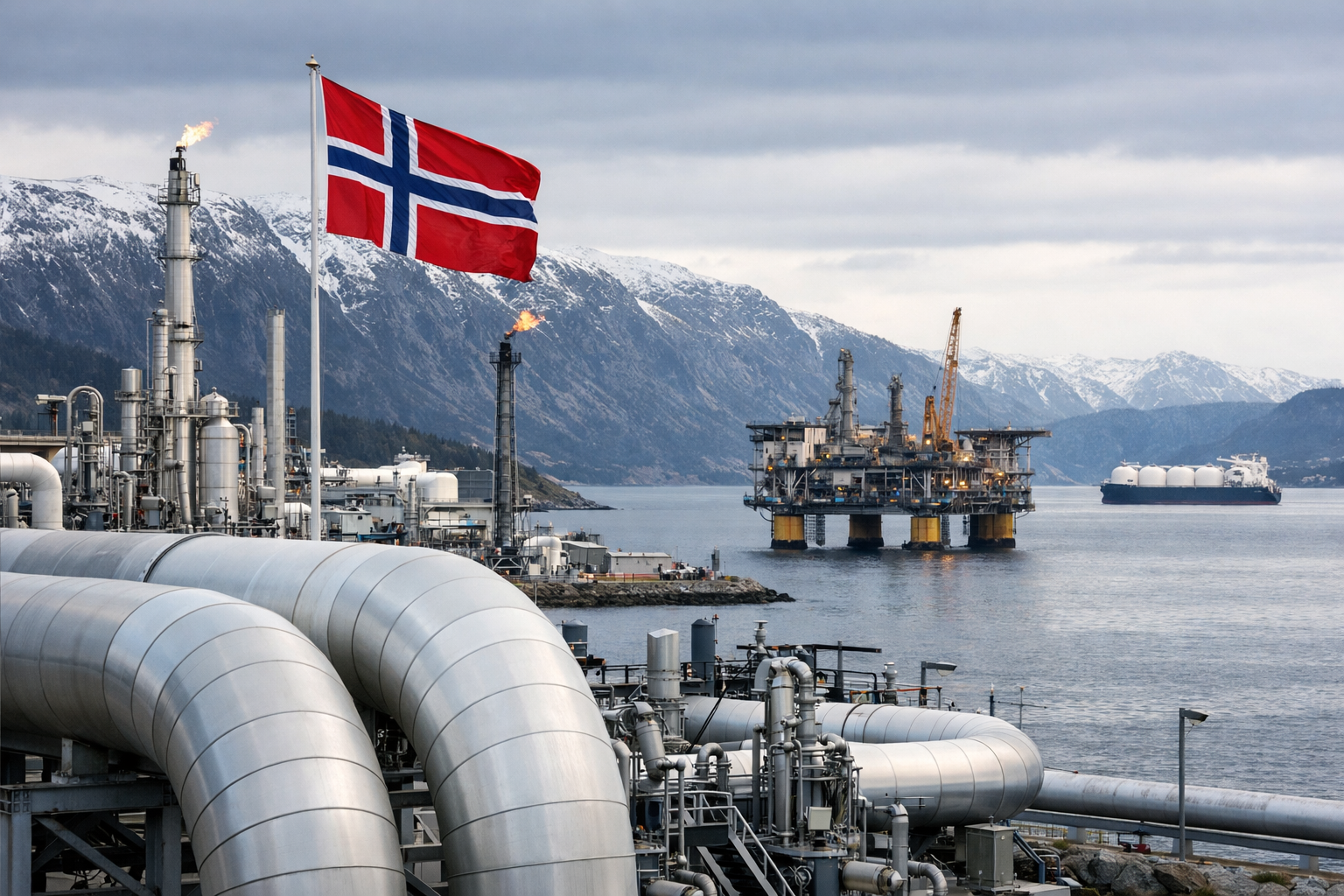
On 24 August 2026 Uniper, the German energy company, and Equinor, the Norwegian oil and gas group, announced they had signed a 15‑year gas sales agreement. According to press releases from both companies, Equinor will deliver more than 30 terawatt‑hours of natural gas annually under the contract, roughly equivalent to 2.8 billion cubic metres per year. The deliveries are scheduled to begin on 1 January 2027 and to run through 31 December 2041.
The contract specifies that the volumes are to be delivered to the German market area Trading Hub Europe (THE), which functions as the central trading and price reference for gas in Germany. The transaction was covered by Reuters and other business outlets, which confirmed the main elements reported in the companies’ announcements, including volume, duration and start date.
- Uniper and Equinor signed a 15‑year gas sales agreement on 24 August 2026 covering deliveries from 01.01.2027 to 31.12.2041.
- Equinor will supply more than 30 TWh (~2.8 billion m³) of natural gas per year to the German market area Trading Hub Europe under the contract.
- Both companies stated pricing and detailed commercial terms are confidential; specific production fields and exact transport routes were not disclosed in the press releases.
Why the deal matters for German supply
The significance of the agreement goes beyond the headline volumes. Norway has been a major supplier for Germany: data from Germany’s Federal Network Agency show that Norway accounted for around 44 percent of Germany’s gas imports in 2025. A long‑term contract with a major Norwegian producer like Equinor therefore strengthens predictable access to a strategically important source and contributes to diversification away from more politically volatile suppliers.
For Uniper, which has been restructuring and repositioning after turbulent years in the gas market, the agreement provides a secured physical source over an extended period. For Equinor the contract locks in a stable outlet for part of its output to one of Europe’s largest markets. In their public statements both companies underlined the importance of the arrangement for Germany’s energy security and pointed to the relatively lower greenhouse gas intensity of Norwegian production compared with some alternatives.
Known terms and outstanding commercial questions
The publicly disclosed contract elements are limited to the signing date, the 15‑year term and the annual volume to be delivered to THE. Crucial commercial terms—such as the price formula, indexation, payment terms and possible volume flexibility—were not made public. Both Uniper and Equinor described these elements as confidential. The absence of price information leaves market participants and observers unable to assess how the deal will affect Uniper’s purchasing costs or German wholesale and retail prices over the contract’s duration.
Likewise, the companies did not specify the exact Norwegian production fields that will supply the gas nor the precise pipeline routes that will be used, other than a general reference to existing pipeline infrastructure. It is therefore not publicly known whether the deliveries are tied to specific upstream assets or handled through trading and allocation within Equinor’s portfolio. Those details matter for assessing operational risks such as maintenance shutdowns, capacity bottlenecks in export pipelines, and the potential for supply disruptions.
Climate footprint and traceability
Both parties highlighted that Norwegian gas tends to have lower greenhouse‑gas intensity than gas from some other sources. The companies also said they would examine a non‑binding letter of intent to explore sales of traceable sustainability attributes – in other words, documentation that would allow Uniper to claim specific information about the origin and emissions intensity of the contracted gas volumes. Such instruments are increasingly sought by buyers aiming to manage their emissions profiles and fulfil disclosure requirements.
However, the press releases did not provide specifics on how those attributes would be certified, verified or reported. Without clear, independently verifiable accounting methods, it is difficult to quantify the climate implications of the contract. There was also no detailed disclosure about any methane abatement measures required at the production and transport stages, which are central to ensuring a lower lifecycle emissions footprint for natural gas.
Market and political implications
From a market perspective, the agreement could help stabilise Uniper’s supply book and provide the company with predictable import volumes. That predictability could, in principle, moderate short‑term price volatility on THE if Equinor consistently provides the contracted quantities. But because price terms are undisclosed, the net effect on spot and forward markets, and ultimately on consumer bills, cannot be assessed publicly.
Politically, the deal reinforces robust energy ties between Germany and Norway. It is likely to be read in Berlin and Brussels as a signal of continued long‑term cooperation with a stable European partner, particularly important in a landscape where supplies from other regions can be geopolitically uncertain. At the same time, the agreement will probably prompt scrutiny from environmental groups and consumer advocates demanding more transparency: observers are expected to call for the publication of details on price formation, production origins and the emissions characteristics of the delivered gas. Policymakers will also have to consider how long‑term fossil fuel contracts align with Germany’s climate goals and with EU‑level rules on energy markets and greenhouse‑gas accounting.
IO SYNTHESIS
THREE-SOURCE ARTICLE ANALYSIS
Uniper and Equinor signed a 15‑year gas sales agreement on 24 August 2026 covering deliveries from 01.01.2027 to 31.12.2041.
OPEN EVIDENCE ↗Equinor will supply more than 30 TWh (~2.8 billion m³) of natural gas per year to the German market area Trading Hub Europe under the contract.
OPEN EVIDENCE ↗Both companies stated pricing and detailed commercial terms are confidential; specific production fields and exact transport routes were not disclosed in the press releases.
OPEN EVIDENCE ↗✓ SOURCES AND DOCUMENTS
01 tagesschau.de ↗02 uniper.energy ↗03 equinor.com ↗Sources last checked · 26.08.2026, 13:59This article was written and checked by the ZEITUNG.IO newsroom. It is updated when new verified information becomes available.