On 25 August 2026 the ifo Institute released its monthly business climate index for Germany: the index rose by 2.1 points in August to 88.8. The figure, published in the institute's press release, indicates a modest improvement in the mood among firms compared with the previous month. Media coverage has treated the number as an early signal of a slight brightening in business sentiment.
However, a single monthly reading offers only limited information. The ifo business climate aggregates firms' current assessments and expectations; therefore, month‑to‑month changes can reflect both short corrective movements and the start of a more sustained trend. Economists and analysts typically examine the index's subcomponents — for example, companies' assessment of their current situation versus expectations for the coming months — to obtain a more nuanced appraisal.
- The ifo business climate index rose by 2.1 points to 88.8 in August 2026 (ifo press release, 25 Aug 2026).
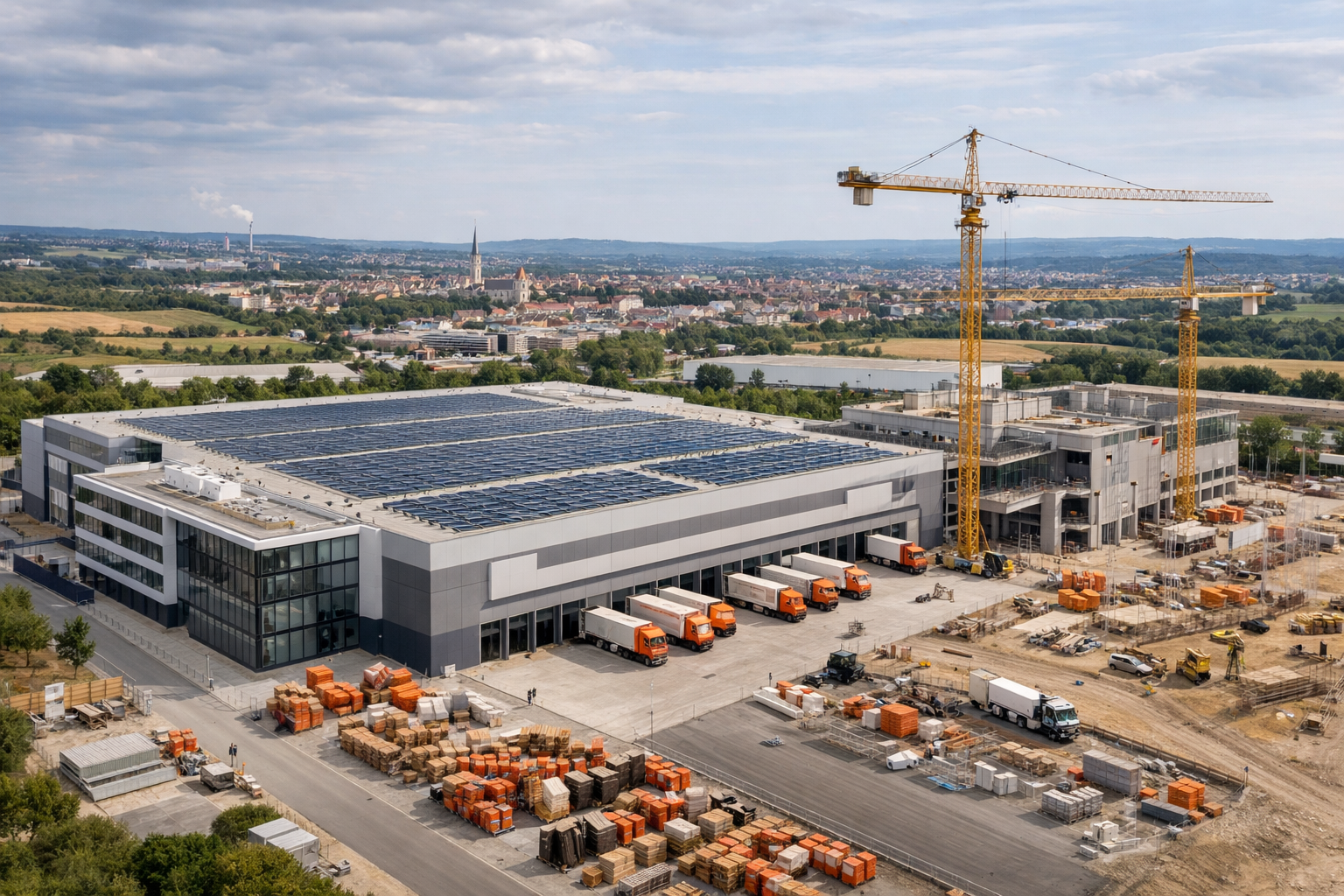
- Lapp announced the construction of a new logistics and service centre in Ludwigsburg (company press materials).
- Lapp describes the Ludwigsburg project as its largest single investment to date (Lapp communications).
Lapp’s response: investing in Ludwigsburg
The Stuttgart‑based cable and connectivity specialist Lapp has been cited in economic reporting as a concrete example of how companies are responding. According to Lapp's own communications and media accounts, the company has started construction on a new logistics and service centre in Ludwigsburg. In its public statements, Lapp describes the project as the largest single investment in the company's history.
From a corporate perspective, expanding logistics capacity is logical: greater warehousing and order‑processing facilities can stabilise supply chains, shorten lead times for customers and create distribution economies of scale. Such investment decisions can also indicate that parts of industry expect more reliable orders or an improvement in demand over the medium term.
Drivers behind the improvement
The ifo figures suggest that expectations rose in certain sectors. In its public commentary, Lapp has characterised the mood as cautious optimism, noting progress in particular sales segments while emphasising that structural risks have not vanished. That cautious language is typical in corporate communications: firms signal readiness to invest while acknowledging ongoing uncertainties.
On a macro level, modest improvements in sentiment can be driven by a range of factors: cyclical recovery in industrial and construction demand, temporary easing of input costs, or improvements in supply chain logistics. Yet sectoral and company‑specific factors — such as winning regional contracts or starting new projects — can also produce noticeable effects for individual firms without immediately altering aggregated economic indicators.
Local impact and jobs
For Ludwigsburg and the surrounding region, Lapp's logistics and service centre could deliver tangible local benefits: construction work, increased demand for logistics services, potential new positions in warehousing, distribution and administration, and secondary effects for local service providers. Such investments often translate into measurable gains in employment and municipal revenues through business taxes.
At the same time, local gains do not necessarily equate to a broad economic turnaround. Investment projects may be accompanied by automation and productivity improvements; not all capacity expansions produce proportional increases in headcount. Regional projects also depend on planning approvals, land availability and local economic conditions, which can influence the timing and scale of job creation.
What is clear — and what is not
What can be verified is straightforward: the ifo index rose by 2.1 points to 88.8 in August 2026, and Lapp has announced the construction of a logistics and service centre in Ludwigsburg that the company describes as its largest single investment. These details are drawn from the ifo press release and Lapp's corporate communications, as reported in German economic media.
What remains uncertain is whether the uptick in sentiment will prove durable. That depends on broader macroeconomic variables such as sustained demand, energy and input costs, financing conditions and the absence of external shocks. For Lapp, it is not yet clear how much the new facility will permanently improve production and delivery performance or merely provide temporary relief. The precise number of jobs that the project will create directly and indirectly has not been publicly quantified in detail.
Assessment and outlook
The recent ifo reading and Lapp's decision to expand logistics capacity point towards a cautious shift in business sentiment: companies appear willing to invest in efficiency and delivery capability when risks become more manageable. This fits a pattern in which firms prioritise strengthening supply chains and operational readiness before embarking on more extensive production or workforce expansions.
Observers will now watch subsequent ifo monthly releases, industry figures such as order books and capacity utilisation, and company reports on utilisation of new facilities like Lapp's Ludwigsburg centre. Together these data will indicate whether this instance of cautious optimism is a fleeting correction or the start of a more sustained recovery in business confidence and investment activity.
IO SYNTHESIS
THREE-SOURCE ARTICLE ANALYSIS
The ifo business climate index rose by 2.1 points to 88.8 in August 2026 (ifo press release, 25 Aug 2026).
OPEN EVIDENCE ↗Lapp announced the construction of a new logistics and service centre in Ludwigsburg (company press materials).
OPEN EVIDENCE ↗Lapp describes the Ludwigsburg project as its largest single investment to date (Lapp communications).
OPEN EVIDENCE ↗✓ SOURCES AND DOCUMENTS
01 tagesschau.de ↗02 ifo.de ↗03 lapp.com ↗Sources last checked · 26.08.2026, 13:29This article was written and checked by the ZEITUNG.IO newsroom. It is updated when new verified information becomes available.