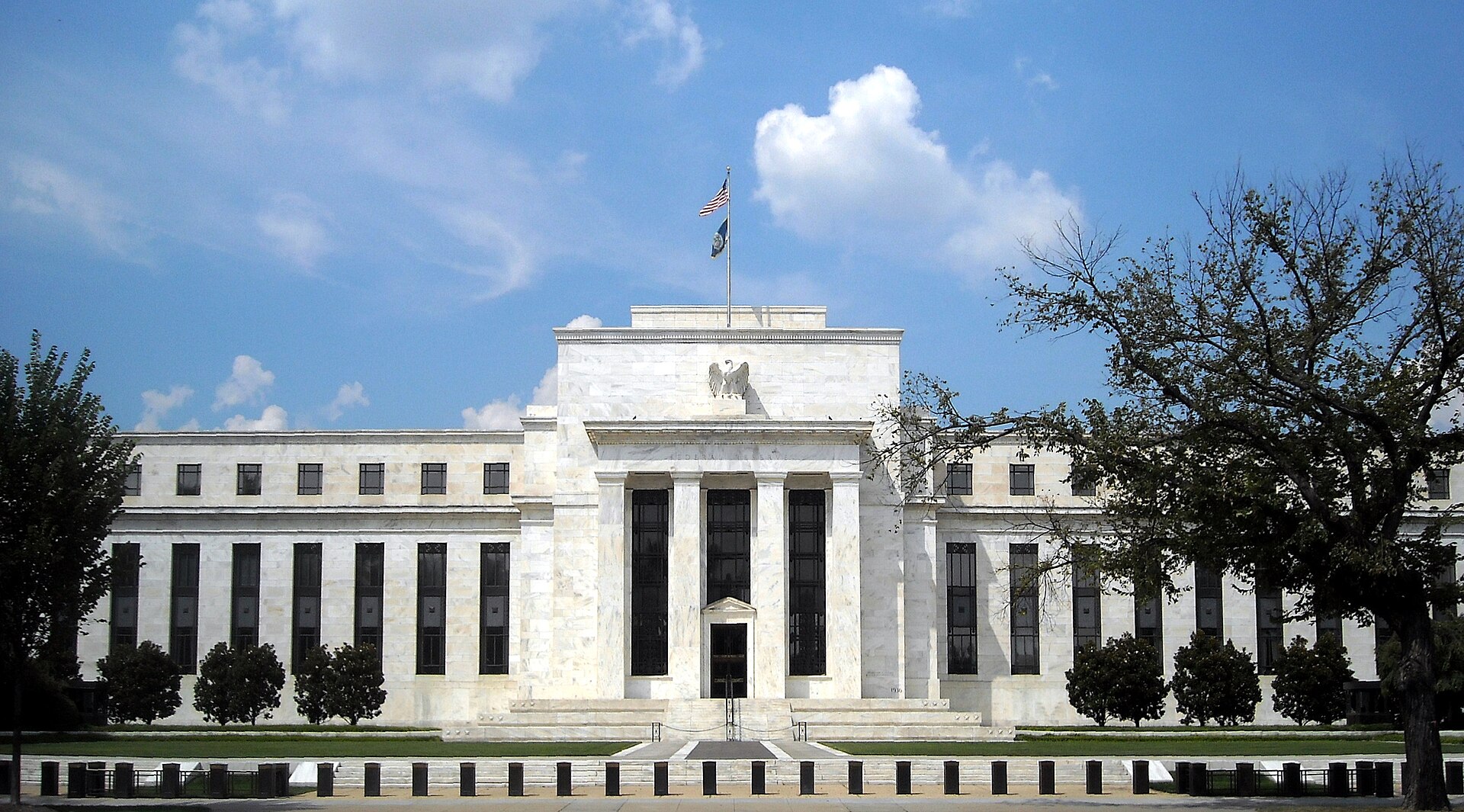
On August 28, 2026, Federal Reserve Chair Kevin Warsh delivered the keynote address at the annual central‑bank symposium in Jackson Hole, Wyoming. The Federal Reserve has published the full prepared text of his remarks on its official website. Warsh acknowledged that recent inflation readings showed some cooling but argued that those figures did not demonstrate a meaningful improvement in the underlying trends. In his words, «they do not tell me that underlying trends have meaningfully improved.» He added: «We must be confident that underlying inflation is moving to our objective, clearly and at sufficient speed. Otherwise, we have work to do.» (Fed speech, August 28, 2026).
International reporting characterised Warsh’s message similarly: he recognised that inflation remained above the Fed’s 2 percent objective and thereby left open the possibility of further tightening in coming months. At the same time, Warsh did not provide explicit timelines or operational guidance; he made clear his comments were not intended as forward guidance, a point highlighted in the Fed’s published manuscript and in reporting by Reuters, the Associated Press and other outlets (Reuters; AP; Axios).
- Kevin Warsh delivered the Jackson Hole keynote on 28 August 2026; the Fed published the full prepared text online.
- Warsh said recent data showed some cooling but «they do not tell me that underlying trends have meaningfully improved.»
- He warned: «We must be confident that underlying inflation is moving to our objective, clearly and at sufficient speed. Otherwise, we have work to do.»
- Warsh did not provide a timetable or specific forward guidance; major outlets (Reuters, AP, Axios, Washington Post) reported consistent interpretations.
Why the phrasing matters for markets and policy
The significance of Warsh’s wording lies in the balance between caution and optionality. By stressing that recent data do not yet show durable improvements in underlying inflationary pressures, Warsh preserved the Fed’s ability to act if incoming data warrant it. Conversely, his refusal to tie those remarks to a specific path or schedule preserved operational flexibility but increased short‑term uncertainty about the timing and size of any future moves.
From a market perspective, such statements are important because they shape expectations about the likely evolution of the federal funds rate. If investors interpret the comments as raising the probability of additional hikes, longer‑dated yields could rise, borrowing costs could climb for households and firms, and risk premia could adjust. The Fed’s explicit distancing from forward guidance, however, complicates model‑based pricing of future policy and elevates the role of incoming macroeconomic data — employment, core inflation measures, wage growth — in driving expectations.
Implications for the domestic US economy
For the US economy, the core question is whether the Fed will need to tighten policy further to restore price stability. An additional increase in rates would typically slow demand, particularly in interest‑sensitive sectors like housing and business investment. That trade‑off — between slower inflation and slower growth — is well understood, and Warsh’s remarks reflect the conventional central‑bank calculus: avoid premature easing before inflation has clearly returned to target.
At the same time, uncertainty about the Fed’s next steps matters for corporations and households making financing decisions. Firms may defer marginal investment projects, households may delay mortgages or large durable purchases, and financial conditions could tighten even absent a formal policy move if risk premia rise. These channels are textbook transmission mechanisms of monetary policy and explain why a public statement without precise guidance can nonetheless have real economic effects.
International and European dimensions
Fed policy developments reverberate globally. Higher US rates can lead to dollar appreciation and upward pressure on global yields. For the euro area, such moves can affect capital flows and exchange rates and complicate domestic policy choices for the European Central Bank. However, transmission is not automatic: the ECB and national central banks make decisions based on regional inflation dynamics, labor‑market conditions and their own mandates.
European firms with dollar‑denominated debt or export‑exposed revenues may feel the impact through financing costs and competitive channels. Policymakers in Europe will monitor US data and Fed communications closely, but any policy reaction will be calibrated to European inflation and growth indicators. Warsh’s undecided stance thus increases the importance of cross‑Atlantic information flows while leaving room for independent regional policy paths.
What is established and what remains uncertain
Verified elements are straightforward: Warsh spoke in Jackson Hole on August 28, 2026; the Federal Reserve published his prepared remarks; he stated that recent data showed some cooling but «do not tell me that underlying trends have meaningfully improved,» and warned that «we have work to do» if underlying inflation is not converging to the Fed’s objective. Major news organisations (AP, Reuters, Axios, Washington Post) have presented the same essential interpretation.
What remains uncertain is the concrete policy response. Warsh offered no dates, specific rate levels, or operational guidance. That leaves the Fed’s next steps dependent on forthcoming economic indicators — core inflation metrics, wage growth, and employment data — and on internal deliberations within the Federal Open Market Committee. Observers should therefore expect heightened sensitivity to incoming data and to subsequent Fed communications, but no definitive policy schedule from Jackson Hole itself.
IO SYNTHESIS
THREE-SOURCE ARTICLE ANALYSIS
Kevin Warsh delivered the Jackson Hole keynote on 28 August 2026; the Fed published the full prepared text online.
OPEN EVIDENCE ↗Warsh said recent data showed some cooling but «they do not tell me that underlying trends have meaningfully improved.»
OPEN EVIDENCE ↗He warned: «We must be confident that underlying inflation is moving to our objective, clearly and at sufficient speed. Otherwise, we have work to do.»
OPEN EVIDENCE ↗✓ SOURCES AND DOCUMENTS
01 ORF · News ↗02 apnews.com ↗03 axios.com ↗Sources last checked · 28.08.2026, 18:33This article was written and checked by the ZEITUNG.IO newsroom. It is updated when new verified information becomes available.