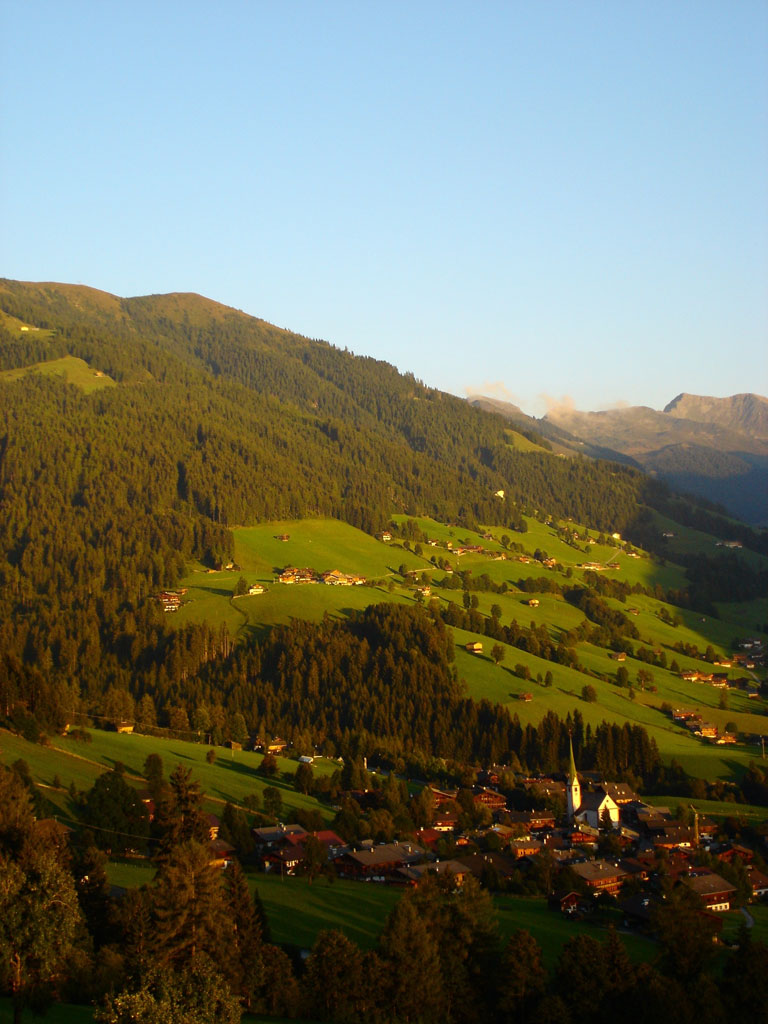
The European Forum Alpbach (EFA26) has brought together politicians, academics, civil society representatives and business leaders to the Tyrolean village of Alpbach. According to the forum’s organisers, EFA26 runs from 24 August to 4 September 2026, with the intensive Conference Days beginning on 30 August (alpbach.org). The format is not that of a legislative assembly but of a public square: panels, workshops and networking events where ideas are tested, alliances are formed and agendas are set.
Coverage in Die Presse on 31 August 2026 highlighted a central question recurring across Alpbach sessions: whether political authority in Europe should be further concentrated in Brussels or devolved to regional and local levels. The article notes that the most concentrated debates are scheduled for the second conference week, which aligns with the official Conference Days starting on 30 August (Die Presse; alpbach.org).
- The European Forum Alpbach 2026 (EFA26) runs from 24 August to 4 September 2026 (alpbach.org).
- The Forum’s Conference Days begin on 30 August 2026 (alpbach.org).
- The distribution of political power between Brussels and regional/local authorities is a central topic at EFA26 (Die Presse, 31.08.2026).
- The European Committee of the Regions (CoR) participates in discussions about territorial representation in the EU (cor.europa.eu).
The debate: Brussels versus decentralisation
The tension between centralisation and decentralisation is longstanding in European politics, but the topic has gained renewed urgency amid divergent regional economic conditions, energy transition challenges and varying public attitudes towards EU policymaking. Proponents of stronger regional autonomy argue that local governments are closer to the citizens and better positioned to tailor policies to specific socio-economic contexts. Opponents warn that too much fragmentation could undermine policy coherence across borders, complicate the enforcement of common standards and weaken the single market.
Discussions in Alpbach are grounded in concrete policy areas: energy and transport transitions, industrial and regional development strategies, the interaction between national parliaments and EU institutions, and questions of democratic legitimacy. Because practitioners share platforms with scholars and civil society actors, the debates tend to focus on practical trade-offs rather than abstractions.
Who speaks — and who actually decides?
Alpbach functions as a deliberative and networking space rather than a decision-making body. The crucial question is how the ideas and alignments emerging at the forum translate into the formal decision-making processes of the EU and its member states. Attendees include municipal and regional leaders, national officials, EU institution representatives, business executives and academics. The presence of the European Committee of the Regions (CoR) underscores the forum’s role as a platform where territorial voices are articulated; the CoR has been active in promoting the role of regions in EU policymaking (cor.europa.eu).
It is important to distinguish between influencing public discourse and creating binding law. Alpbach can facilitate agenda-setting and coalition-building, but binding decisions remain the remit of the European Commission, the Council, the European Parliament and national governments and parliaments. The path from forum debate to legislative outcome is indirect and contingent on political alignments and institutional incentives.
Institutional limits and legal constraints
The EU treaties and the decision-making culture in Brussels impose institutional limits that shape how far powers can be devolved. Some policy domains are primarily under EU competence or require coordinated action across member states; unilateral decentralisation can jeopardise legal certainty and the enforcement of common rules. Transnational challenges—such as meeting climate targets, regulating digital markets, or guaranteeing a level playing field—often require coherent, centrally coordinated responses.
Nevertheless, the EU also contains mechanisms that allow greater territorial involvement. The Committee of the Regions has a consultative role, and the principle of subsidiarity aims to ensure that decisions are taken as closely as possible to citizens. The Alpbach conversations reflect an effort to reconcile the need for effective EU-wide action with calls for stronger regional representation and more flexible implementation modalities.
Political consequences and plausible scenarios
If regional voices gain more formal traction, practical consequences might include more devolved implementation responsibilities in areas like infrastructure, energy planning or regional economic development. EU legislation could increasingly take the form of framework directives with flexible transposition mechanisms to accommodate regional diversity. That scenario could empower regional administrations but would require new coordination arrangements to prevent regulatory fragmentation.
Conversely, greater centralisation would aim to ensure harmonised standards for the single market and stronger enforcement in transnational policy areas. Each path has trade-offs: decentralisation can enhance local fit and democratic responsiveness, while centralisation may improve legal clarity, enforcement capacity and cross-border coherence. The policy choices are ultimately political and will depend on the balance of influence between member states, regional actors and EU institutions.
What is known — and what remains uncertain
It is established that EFA26 is taking place from 24 August to 4 September 2026 and that the most intensive Conference Days begin on 30 August (alpbach.org). It is also clear that the question of power distribution between Brussels and territorial levels is central to the forum’s discussions, and that representatives of the European Committee of the Regions participate in related exchanges (Die Presse; cor.europa.eu).
Less clear, however, is which ideas emerging from Alpbach will find political traction. Forums can shape discourse, build networks and stimulate policy innovation, but converting rhetoric into legislative change requires alignment with institutional processes and the political will of national governments and EU bodies. Which proposals will secure such backing—and whether any will lead to durable changes in how Europe decides—remains an open question that will be resolved in the months and years ahead.
IO SYNTHESIS
THREE-SOURCE ARTICLE ANALYSIS
The European Forum Alpbach 2026 (EFA26) runs from 24 August to 4 September 2026 (alpbach.org).
OPEN EVIDENCE ↗The Forum’s Conference Days begin on 30 August 2026 (alpbach.org).
OPEN EVIDENCE ↗The distribution of political power between Brussels and regional/local authorities is a central topic at EFA26 (Die Presse, 31.08.2026).
OPEN EVIDENCE ↗✓ SOURCES AND DOCUMENTS
01 diepresse.com ↗02 alpbach.org ↗03 alpbach.org ↗Sources last checked · 31.08.2026, 02:42This article was written and checked by the ZEITUNG.IO newsroom. It is updated when new verified information becomes available.