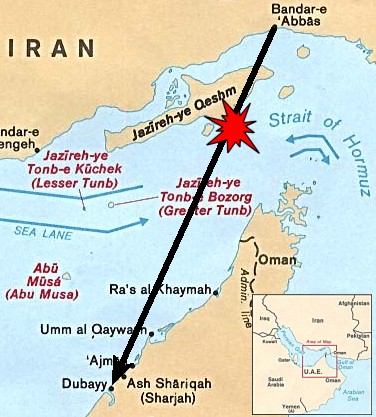
Britain's UK Maritime Trade Operations (UKMTO) published a warning this morning reporting that a tanker in the Strait of Hormuz had been hit by an 'unknown projectile'. The notification, filed as Warning 055-26, states that a fire broke out on board but was subsequently extinguished. According to UKMTO, the crew remained unharmed and are safe — information that several media outlets, including Der Standard, have relayed.
The concise UKMTO alert does not identify the vessel by name, flag or operator, nor does it provide detailed coordinates. It is standard practice for UKMTO to issue short safety warnings to shipping in the region when vessels report incidents; such alerts are intended to inform mariners and maritime stakeholders about immediate risks to navigation.
- UKMTO issued Warning 055-26 reporting that a vessel in the Strait of Hormuz was hit by an unknown projectile.
- The warning states a fire broke out on board but was extinguished and that the crew were uninjured.
- Media reports, including Der Standard, published accounts of the UKMTO notice; earlier UKMTO warnings (e.g. 012-26 and 019-26) had signalled prior incidents in the area.
Context and previous warnings
This event follows a series of UKMTO notices earlier in the year. In March, the organisation issued several warnings (for example, Warning 012-26 and Warning 019-26) reporting attacks or threats to commercial shipping in nearby waters. Those prior notices, together with the latest warning, indicate an extended period in which merchant vessels have faced elevated risks in and around the Strait of Hormuz.
The repetition of such messages has operational and commercial consequences for the shipping industry. Operators frequently react to heightened risk by modifying routes, using additional protective measures aboard vessels, or arranging for security teams. These responses increase voyage costs and can affect the timing and reliability of cargo deliveries, particularly for energy shipments transiting that choke point.
What is known and what remains uncertain
What the public record establishes is limited but concrete: a vessel was struck, a fire occurred and was put out, and the crew suffered no injuries. These points are specifically stated in the UKMTO warning and were echoed in reporting by outlets such as Der Standard. The fact that the fire was extinguished points to effective on-board response or support from nearby units, though the alert does not specify which.
What remains unknown—and central to any investigation—is the origin and nature of the projectile. The UKMTO statement describes it only as an 'unknown projectile' and does not provide technical details that would indicate whether it was a missile, a drone munition, a torpedo, or another weapon type. There is also no public information in the warning about observed aircraft, naval activity, or possible perpetrators.
Implications for shipping and energy markets
The Strait of Hormuz is a strategic maritime bottleneck through which a significant share of global crude oil and liquefied natural gas shipments pass. Incidents involving tankers in the area can have immediate economic ripple effects, including short-term increases in oil prices and higher insurance premiums for vessels operating in the region. Insurers may levy 'war risk' surcharges, and charterers can demand additional protective measures.
Shipowners face a mix of direct and indirect costs: elevated insurance, potential re-routing that extends voyage time and fuel consumption, and investment in additional onboard security or escorts. For energy markets, even localized disruptions can translate into wider price sensitivity given the global nature of oil and gas supply chains, although the precise market impact depends on inventory levels and broader geopolitical developments.
Regional security dynamics and international reaction
The Strait of Hormuz sits at the intersection of competing regional interests and has long been the focus of naval deployments by both regional states and international partners. Naval presence has increased periodically in response to perceived threats to commercial shipping. Balancing the protection of maritime traffic with the risk of escalation is a central challenge for states operating in the area.
At the time of the UKMTO warning, there were no public statements from major states or international organisations attributing responsibility or announcing a coordinated response to this specific incident. Typically, affected flag states, operators and bodies such as the International Maritime Organization call for thorough inquiries into such events. Whether this incident will prompt bilateral or multilateral investigative steps has not been published.
What to watch next
Near-term updates that could change the picture include official confirmations from the ship's owners or flag state, technical assessments of the damage, and any surveillance or naval reports from vessels in the area. Clarifying the weapon type and establishing the sequence of events will be crucial to attribution and any potential legal follow-up. Longer-term, analysts will monitor whether the cluster of incidents earlier this year and this latest event lead to sustained changes in maritime security practices or diplomatic initiatives to reduce the risk to commercial shipping.
For shipping companies, insurers and energy market participants, the situation demands close monitoring. Adjustments to operational planning, insurance underwriting and security postures are likely responses as stakeholders reassess exposure to maritime risk in an already sensitive region.
IO SYNTHESIS
THREE-SOURCE ARTICLE ANALYSIS
UKMTO issued Warning 055-26 reporting that a vessel in the Strait of Hormuz was hit by an unknown projectile.
OPEN EVIDENCE ↗The warning states a fire broke out on board but was extinguished and that the crew were uninjured.
OPEN EVIDENCE ↗Media reports, including Der Standard, published accounts of the UKMTO notice; earlier UKMTO warnings (e.g. 012-26 and 019-26) had signalled prior incidents in the area.
OPEN EVIDENCE ↗✓ SOURCES AND DOCUMENTS
01 derstandard.at ↗02 ukmto.org ↗03 ukmto.org ↗Sources last checked · 27.08.2026, 08:28This article was written and checked by the ZEITUNG.IO newsroom. It is updated when new verified information becomes available.