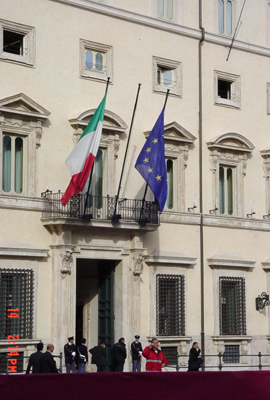
The Italian Council of Ministers (Consiglio dei Ministri) has approved an extension of the existing reduction in the diesel excise duty — commonly reported in the press as roughly 17 euro cents per litre — keeping the measure in force until 5 September 2026. The decision was reported by Italian news agencies and outlets citing government sources; a video report from ANSA covered the government meeting and several regional papers such as Livesicilia and national outlets relayed the announcement. The government framed the extension as a short-term relief aimed at consumers and businesses, continuing the pattern of time-limited discounts that have been used to soften fuel price volatility.
Officially, the extension is presented as a transitional arrangement intended to give time for more considered long-term policies on energy and taxation. It was not positioned as a comprehensive fiscal reform but as a targeted, temporary adjustment to the consumption tax on diesel.
- Italy’s Council of Ministers extended the reduction in the diesel excise duty until 5 September 2026.
- The discount has been widely reported in media as approximately €0.17 per litre of diesel.
- Reports on the decision were published by ANSA, Der Standard and local outlets such as Livesicilia.
Political rationale
The decision reflects a mix of economic and political calculations. Diesel is not only used by private motorists in Italy but is especially important to the freight sector, agriculture and many small and medium-sized enterprises. Government spokespeople have argued that abruptly ending the discount could push up transport costs and feed through into higher prices for goods and services, particularly affecting sectors with high logistics exposure.
From a political standpoint, the extension offers near-term relief to voter groups sensitive to rising fuel costs and sends a signal to affected industries that policymakers are responsive to their concerns. Officials have emphasized the measure is intended to preserve stability while longer-term instruments are developed, rather than to permanently subsidize a fossil fuel.
Economic consequences and fiscal questions
The government has not published detailed estimates of how much the extension will cost the public purse. Analysts working on energy and fiscal policy note that even modest per-litre reductions can add up to substantial sums when aggregate diesel consumption is high and a relief is maintained over weeks or months. Without official budgetary figures, the exact fiscal impact on deficit and spending priorities remains uncertain.
For transport companies, logistics firms and other diesel‑intensive industries, the continuation of the discount offers immediate margin relief and helps planning in the face of price volatility. For households, the measure lowers day-to-day expenses, with the greatest benefit accruing to frequent drivers and commuters. Economists caution, however, that ad hoc tax cuts may be a blunt instrument for addressing inflationary pressures, and some argue for more targeted transfers or investments to accelerate the shift to lower-emission transport technologies.
Reactions from business, civil society and politics
Carriers’ associations and small business representatives welcomed the decision in initial responses, citing the need for greater predictability in operating costs. They argued that fuel price volatility constitutes a competitive disadvantage and that a temporary discount mitigates the risk of sudden cost spikes. Environmental NGOs and parts of the research community criticised the extension, arguing that continued subsidisation of a fossil fuel sends the wrong signal for climate policy and may crowd out investment in electrification and alternatives.
Political opposition reactions were mixed: some parties demanded broader relief measures or more targeted support for low-income households, while others dismissed the extension as a short-term political manoeuvre lacking a coherent strategic outlook. Parliamentary debates and further statements are expected to clarify where the measure sits within the government’s wider policy priorities.
Implications for Austria and cross‑border trade
Italy’s move has potential implications for neighbouring countries like Austria, especially in border regions where consumers and hauliers compare fuel prices. Lower diesel prices in Italy could encourage cross-border refuelling, affecting business at Austrian border stations and influencing the transport economics of companies operating on north-south routes. Logistics operators conducting cross‑border runs between northern Italy and Austria may gain some immediate cost relief.
Tax-driven price differentials also complicate the formation of uniform market conditions across borders. Austrian authorities and firms are likely to monitor developments closely because prolonged price divergences can shift trade flows, influence the location of refuelling stops and introduce competitive asymmetries in sectors dependent on road transport.
Open questions and what we do not yet know
Despite the government announcement, key questions remain unresolved: the exact fiscal cost of the extension has not been disclosed, and it is unclear whether complementary measures are being planned to reconcile short-term relief with Italy’s climate and mobility goals. The government has not published a timetable or a strategy detailing how it intends to use this transitional period to foster investment in lower-emission technologies or to redesign tax instruments for transport energy.
It is also uncertain whether this will remain a one-off, short-term intervention or if it marks the start of a pattern of periodic tax adjustments that could shape market and investment expectations. Observers will be watching forthcoming budget documents, parliamentary scrutiny and any follow-up statements from ministries responsible for finance, transport and the environment to better assess whether the extension is a stopgap or part of a broader policy trajectory.
IO SYNTHESIS
THREE-SOURCE ARTICLE ANALYSIS
Italy’s Council of Ministers extended the reduction in the diesel excise duty until 5 September 2026.
OPEN EVIDENCE ↗The discount has been widely reported in media as approximately €0.17 per litre of diesel.
OPEN EVIDENCE ↗Reports on the decision were published by ANSA, Der Standard and local outlets such as Livesicilia.
OPEN EVIDENCE ↗✓ SOURCES AND DOCUMENTS
01 derstandard.at ↗02 videoembed.ansa.it ↗03 livesicilia.it ↗Sources last checked · 26.08.2026, 22:05This article was written and checked by the ZEITUNG.IO newsroom. It is updated when new verified information becomes available.