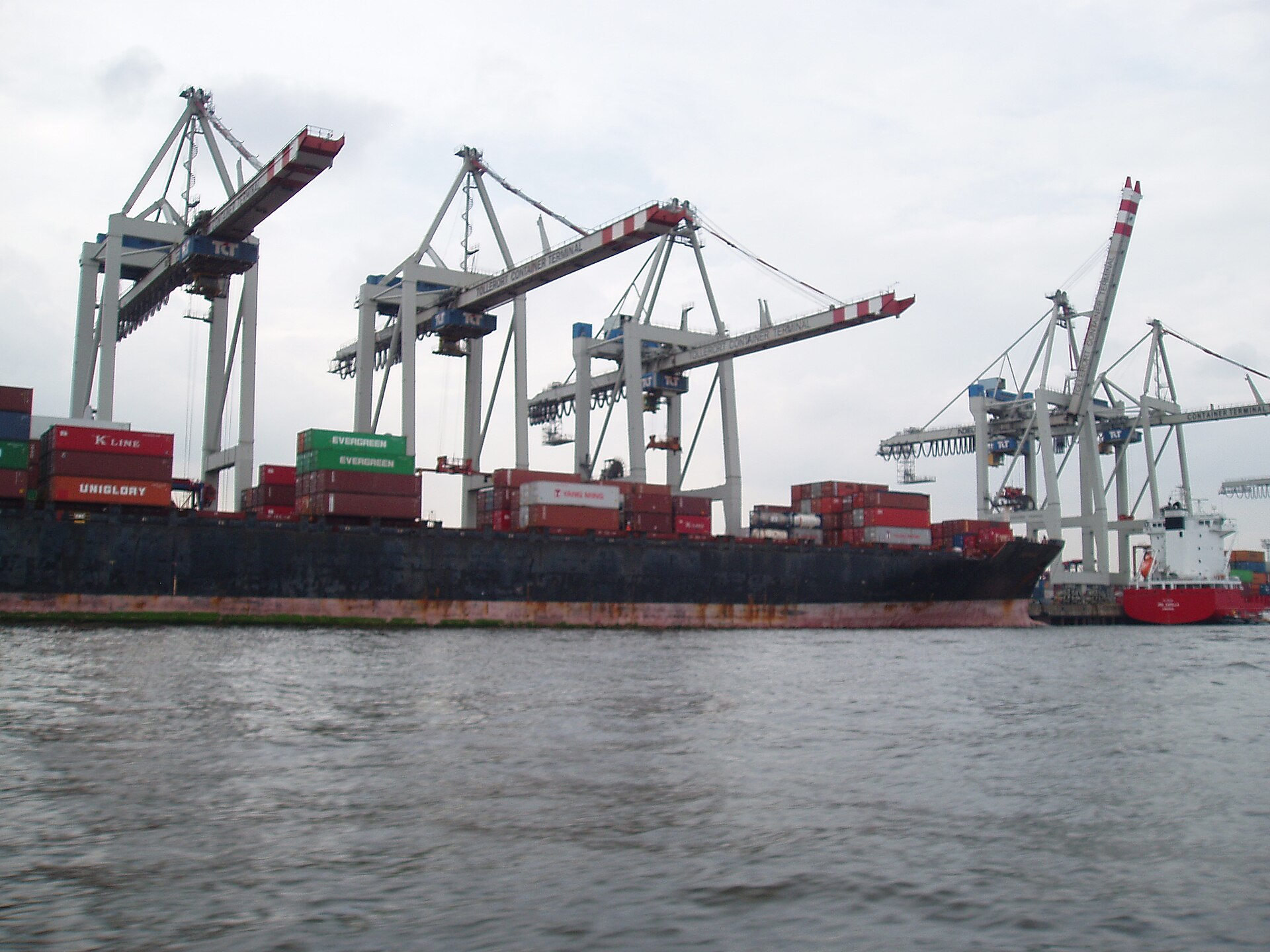
German exporters sold more goods abroad in the first half of 2026 than a year earlier. Destatis puts exports at €817.8 billion, up 3.9%. Imports rose slightly faster to €712.1 billion. The trade surplus remained large at €105.7 billion but was marginally below the previous year’s level.
The figures fit the Bundesbank’s latest assessment that exports and foreign demand supported German industry in the second quarter. That is an important change after a long period in which weak manufacturing and foreign trade were mainly seen as drags. Yet the recovery is not evenly distributed across markets or sectors.
- Germany exported goods worth €817.8 billion in the first half of 2026.
- Exports rose 3.9% while imports increased 4.7%.
- China remained the largest trading partner with €125.5 billion in total trade.
- The United States remained Germany’s largest export destination even as shipments there declined year on year.
China is number one — mainly as a supplier
With total trade of €125.5 billion, China remained Germany’s largest trading partner. The structure is highly asymmetric, however. Tagesschau reports imports from China of €89.1 billion in the first half, compared with German exports to China of €36.4 billion. The ranking alone therefore says less than the direction of the flows.
The United States remains the biggest customer
On the export side, the United States remains central. It was still the largest destination for German goods even though shipments declined in the first half. The automotive sector experienced particularly sharp falls. That illustrates Germany’s double exposure: deep dependence on Chinese supply chains and significant sales interests in a more politically volatile US market.
Europe is becoming the stabiliser
A major part of export growth came from trade with other EU countries. That strengthens the argument that the single market becomes more valuable as global trade fragments. For German manufacturers this is not a glamorous new export story, but perhaps the more strategic one: shorter distances, common rules, lower tariff risk and often more integrated industrial value chains.
Recovery is not the same as security
The Bundesbank sees the economy on a recovery path but still points to low capacity utilisation, weak investment impulses and high uncertainty. The trade numbers should therefore not be read as an all-clear. Germany is exporting more strongly again, but the geopolitical map of trade has become more complicated. The next phase of growth will depend on whether companies diversify sales, make supply chains more resilient and raise productivity inside the European market.
IO SYNTHESIS
THREE-SOURCE ARTICLE ANALYSIS
Germany exported goods worth €817.8 billion in the first half of 2026.
OPEN EVIDENCE ↗Exports rose 3.9% while imports increased 4.7%.
OPEN EVIDENCE ↗China remained the largest trading partner with €125.5 billion in total trade.
OPEN EVIDENCE ↗✓ SOURCES AND DOCUMENTS
01 Destatis — Foreign trade H1 2026 ↗02 Deutsche Bundesbank — Konjunkturlage August 2026 ↗03 tagesschau — China bleibt Top-Handelspartner ↗Sources last checked · 24.08.2026, 10:55This article was written and checked by the ZEITUNG.IO newsroom. It is updated when new verified information becomes available.