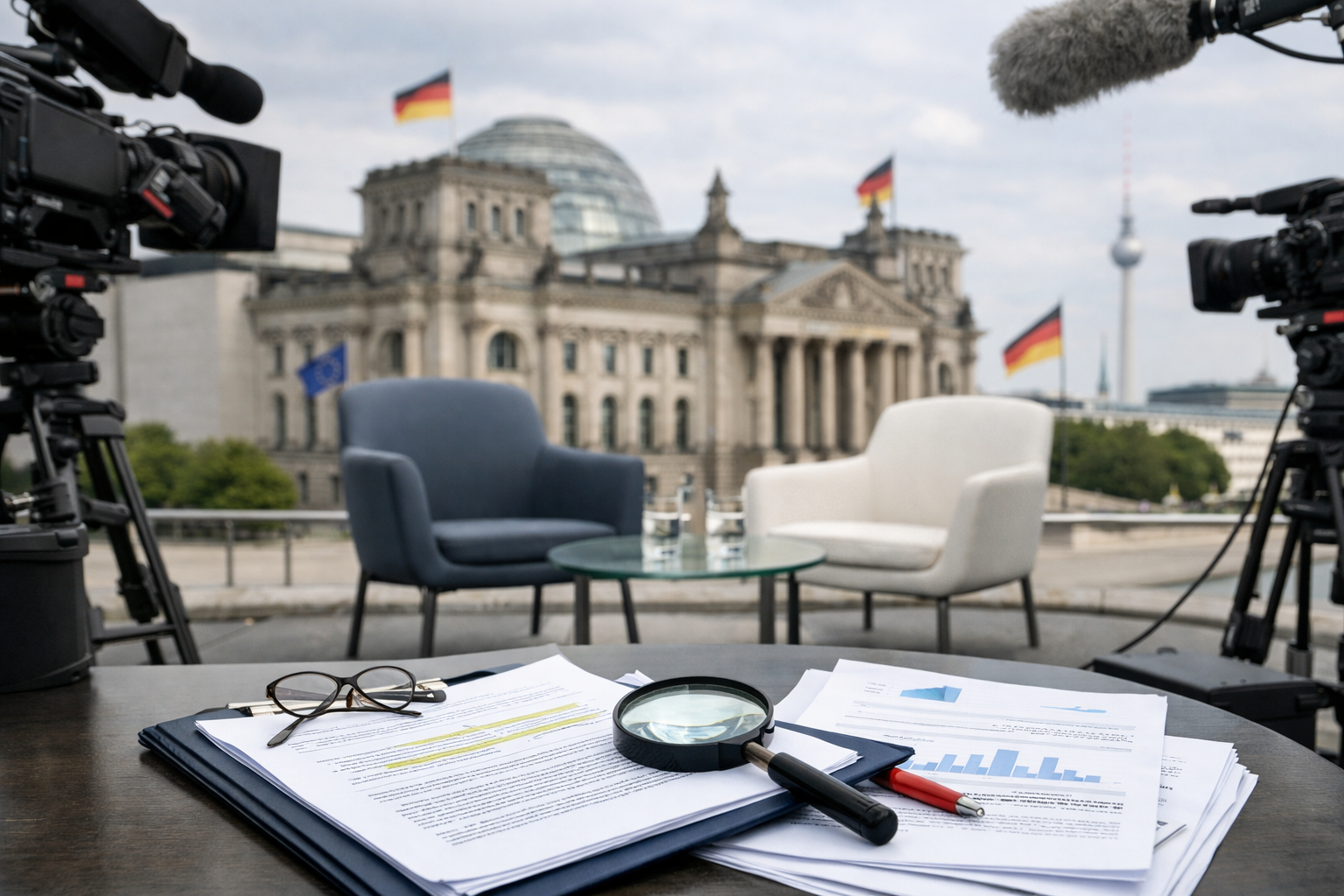
On 23 August 2026, Tino Chrupalla, leader of the Alternative for Germany (AfD), appeared in the ARD summer interview. The programme, which traditionally gives senior politicians the opportunity to answer extended questions on public broadcasting, was recorded and made available in the ARD Mediathek. The broadcast prompted immediate discussion not only about the content of the party leader’s statements but also about the broader question of how public broadcasters should handle appearances by representatives of more controversial parties.
Debate over the AfD's presence in mainstream media has been ongoing in Germany. Some argue that the party’s political relevance obliges broadcasters to engage with its representatives; others warn that interviews can have an amplifying effect that requires stronger contextualisation and critical scrutiny. The ARD summer interview is a classic test case where journalistic duty, public expectation and political polarisation intersect.
- The ARD summer interview with AfD leader Tino Chrupalla aired on 23 August 2026 and is available in the ARD Mediathek.
- Tagesschau.de published a fact check that examined statements from the interview and compared them with public sources.
- Tagesschau.de operates the 'Faktenfinder' section, which documents and evaluates political claims.
Scope and subjects addressed in the interview
The hour‑long conversation covered a wide range of topics, from migration and internal security to foreign and economic policy. ARD’s interview format is designed to allow deeper responses and follow‑up questions, offering a setting in which political positions can be probed more comprehensively than in brief studio segments. For viewers seeking the entire context, the ARD Mediathek provides the full recording, enabling subsequent analysis by other media, researchers and citizens.
Because the material is publicly accessible, journalists and independent fact‑checkers can revisit statements line by line. That availability is central to ensuring accountability in public discourse: it enables post‑broadcast scrutiny that can confirm, nuance or contradict the immediate impressions from live viewing.
The fact check: methodology and main thrust
Tagesschau.de conducted a dedicated fact check of the interview, examining specific claims made by Chrupalla and comparing them with available official statistics and established sources. The article outlines the verification process and references the materials used for cross‑checking. This kind of transparent methodology is a common practice in the Tagesschau 'Faktenfinder' unit, which aims to document and evaluate public assertions by political actors.
The fact check identified discrepancies between certain statements and public data. Tagesschau.de presented where assertions aligned with evidence, where they were simplifications, and where they diverged from verifiable facts. This approach provides readers with the sources and reasoning needed to understand the basis for the editorial judgement.
Journalistic ethics and the question of platforming
The process highlights broader ethical questions: to what extent must media give airtime to controversial parties, and what obligations arise from that exposure? Public broadcasters in Germany invoke their remit to inform and to represent the diversity of political opinion, but they also face expectations to ensure accuracy and responsible framing. The tension between inclusivity and containment — allowing access while limiting the spread of misleading information — sits at the heart of editorial decision‑making.
Some commentators and media critics have called for interviews with AfD representatives to be accompanied by more immediate fact checks and stronger context. Proponents of open engagement argue that excluding parties from mainstream platforms risks democratic closure. The Tagesschau fact check functions as a corrective tool after broadcast, yet it also feeds into an ongoing discussion about how live political formats should be structured to better protect the public sphere.
Political repercussions and the public response
The interview and the subsequent Tagesschau examination generated reactions across party lines and within the media. Political opponents pointed to the discrepancies identified in the fact check as grounds to criticise Chrupalla’s credibility; media professionals debated whether the interview format itself was adequate to challenge certain assertions in real time. For the AfD, the exposure brings both reach and intensified scrutiny — greater visibility in the short term and more rigorous verification of statements over the longer term.
For broadcasters, the episode underscores the need to balance immediate journalistic pressure with after‑the‑fact verification. Editors must consider whether to adjust programme formats, integrate real‑time fact‑checking resources, or provide follow‑up segments that summarise verified findings. The interaction between live interviews and post‑broadcast corrections will likely shape editorial practice going forward.
What is established and what remains open
Confirmed facts are straightforward: the ARD summer interview with Tino Chrupalla took place on 23 August 2026, the recording is available in the ARD Mediathek, and Tagesschau.de published a fact check comparing statements from the interview with public sources. The Tagesschau 'Faktenfinder' unit made its methods and references transparent while noting where statements did not match publicly available evidence.
What remains unresolved are longer‑term questions about editorial standards and public communication: which concrete changes, if any, will public broadcasters implement to reduce the circulation of misleading claims during high‑profile interviews? And how will political actors adjust their messaging in response to more systematic post‑broadcast verification? The answers will depend on decisions by editorial boards, public expectations and the evolving norms of political journalism in Germany.
IO SYNTHESIS
THREE-SOURCE ARTICLE ANALYSIS
The ARD summer interview with AfD leader Tino Chrupalla aired on 23 August 2026 and is available in the ARD Mediathek.
OPEN EVIDENCE ↗Tagesschau.de published a fact check that examined statements from the interview and compared them with public sources.
OPEN EVIDENCE ↗Tagesschau.de operates the 'Faktenfinder' section, which documents and evaluates political claims.
OPEN EVIDENCE ↗✓ SOURCES AND DOCUMENTS
01 tagesschau.de ↗02 tagesschau.de ↗03 ardmediathek.de ↗Sources last checked · 26.08.2026, 14:20This article was written and checked by the ZEITUNG.IO newsroom. It is updated when new verified information becomes available.