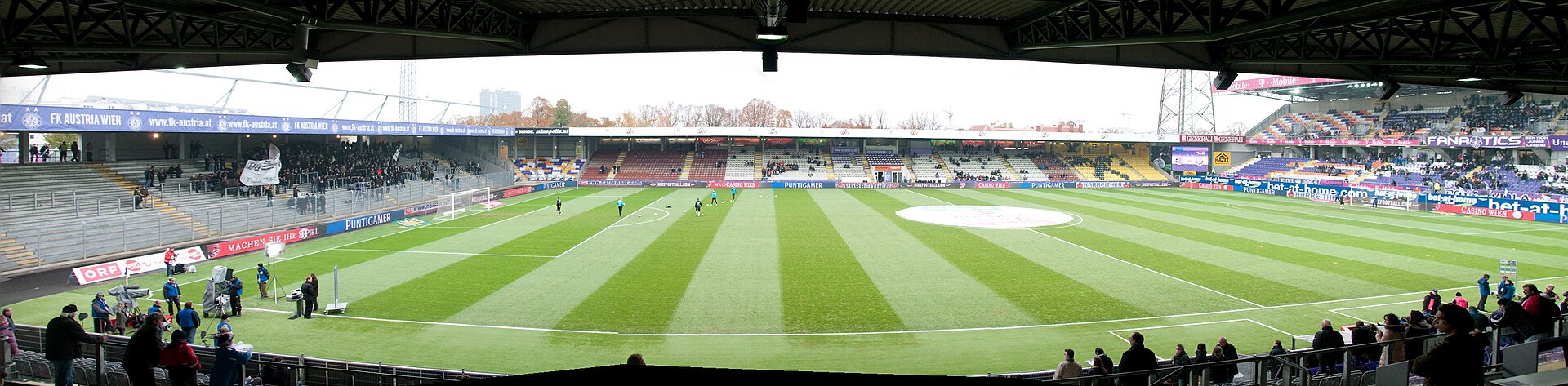
Austria Wien enters the UEFA Conference League play‑off return with a clear and difficult task: after a 0:2 loss in the first leg against Sporting Braga in Portugal, the Viennese club must overturn that deficit at home to secure progression into the group stage. The fixture, confirmed in official reports from UEFA and the club, represents the final hurdle before the competition proper. Austria reached this stage after previous qualifying rounds, and the defeat in Braga has set up a must‑perform scenario for the team and its supporters.
The basic arithmetic of two‑legged ties in UEFA competitions frames the challenge: Austria must score multiple goals while keeping a clean sheet or, at least, avoiding conceding a decisive away goal that would push the tie further into a situation where the Portuguese side can defend a narrow aggregate lead. The club has publicly acknowledged the importance of the upcoming return match on its website, emphasizing preparation and the need for an improved performance compared with the first leg.
- FK Austria Wien lost the first leg of the Conference League play‑off against Sporting Braga 0:2.
- The fixture is part of the play‑off round to qualify for the UEFA Conference League group stage, as documented by UEFA and the club.
- UEFA abolished the away‑goals rule; if the aggregate score is level after 90 minutes, the tie proceeds to extra time and potentially penalty kicks.
What the first leg revealed
Match reports from UEFA and club sources show that Austria struggled to create clear scoring opportunities in Braga and were vulnerable on transitions. A 0:2 deficit in such a two‑leg series typically highlights both attacking inefficiency and moments of defensive weakness. Sporting Braga, a club with regular European involvement and structured game plans, managed to capitalize on its chances and maintain control. For Austria, the first leg displayed weaknesses that must be addressed: quicker forward combinations, better exploitation of wide areas, and more coordinated pressing phases to disrupt Braga’s build‑up play.
Beyond the tactical specifics, the psychological imprint of an away defeat must be considered. Teams that lose on the road but return home can feel pressure to force the game early, which may leave them exposed to counters. How Austria’s coach organises the squad to balance urgency with defensive security will be critical. The first leg provided a template of Braga’s strengths, but also exposed potential vulnerabilities that Austria can target in the return match—if it is able to alter its approach with greater precision.
The mathematical requirement and match scenarios
From a purely numerical standpoint, the elimination is straightforward but nuanced by UEFA’s current rules. Since UEFA abolished the away‑goals rule, an aggregate tie level after 90 minutes will proceed to extra time and, if necessary, penalty kicks. Therefore, a 2:0 win for Austria in Vienna would level the aggregate at 2:2 and send the tie into extra time rather than immediately awarding progression. To win in regular time without extra time Austria would need to win by three goals (for example 3:0 or 4:1), or produce another aggregate advantage that cannot be neutralised within 90 minutes.
Consequently, Austria must weigh the desire to score early against the risk of opening space for Braga. The most straightforward path to avoid extra time is a high‑intensity performance that yields at least three goals while preventing Braga from scoring. However, given the varying probabilities in football, building strategies that allow for resilience into extra time and possible penalties is also an important contingency.
Tactical and practical considerations for Austria
Official pre‑match notices from FK Austria emphasise a focused preparation, but public documents do not always lay out full detail on injuries or suspensions. That makes line‑up choices and in‑game management all the more consequential. A coach might opt for earlier offensive substitutions, push the full‑backs higher, or switch to formations that allow for greater midfield control—each of these choices brings both potential rewards and risks. Any shift towards a more aggressive front will need to be supported by a disciplined central midfield to avoid quick Braga counters.
In addition to shape and personnel, set‑pieces and game management will likely be decisive. When a tie is tight, corners, free kicks and accurate delivery into the penalty area can change the balance. Austria must therefore ensure both the quality of delivery and defensive organisation during such phases. The team’s mental fortitude under pressure, particularly in the closing stages should the scoreline still favour Braga, will also be a crucial factor.
Consequences of progression and remaining uncertainties
If Austria Wien manages to overturn the score and reach the Conference League group stage, the immediate outcomes are tangible: additional matches, greater revenue, increased visibility for players and the club, and a stronger platform for recruitment or squad consolidation. Progress in Europe often has knock‑on effects in domestic competition—through boosted confidence, but also through fixture congestion and physical demands on the squad. The club’s strategy for rotating players and managing fitness will thus become more important should they advance.
Yet significant uncertainties remain. How will Braga approach the return leg tactically? Will the Portuguese side sit deeper and seek to close spaces, or will it play ambitiously to unsettle Austria early on? How will Austria manage fatigue and collective tension among its players? Official club communications set the ambition clearly: Austria intends to force qualification. But the match itself will resolve many of the open questions, and the tie’s outcome will hinge on on‑the‑day execution rather than pre‑match declarations.
IO SYNTHESIS
THREE-SOURCE ARTICLE ANALYSIS
FK Austria Wien lost the first leg of the Conference League play‑off against Sporting Braga 0:2.
OPEN EVIDENCE ↗The fixture is part of the play‑off round to qualify for the UEFA Conference League group stage, as documented by UEFA and the club.
OPEN EVIDENCE ↗UEFA abolished the away‑goals rule; if the aggregate score is level after 90 minutes, the tie proceeds to extra time and potentially penalty kicks.
OPEN EVIDENCE ↗✓ SOURCES AND DOCUMENTS
01 kurier.at ↗02 datencenter.dfb.de ↗03 uefa.com ↗Sources last checked · 27.08.2026, 07:23This article was written and checked by the ZEITUNG.IO newsroom. It is updated when new verified information becomes available.