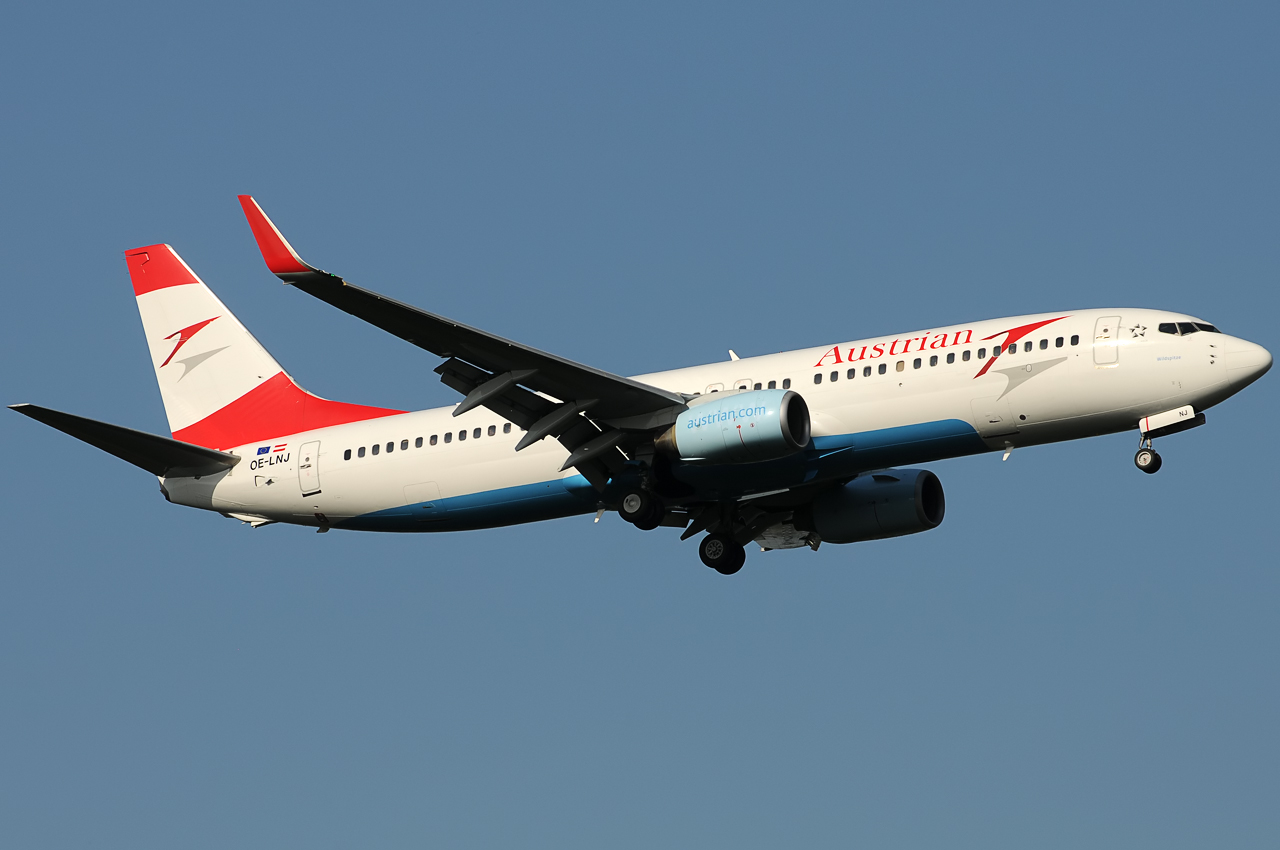
A market analysis published by AirAdvisor in August 2026 ranks Austrian Airlines (AUA) as one of the more expensive carriers in Europe when measured by RASK (revenue per available seat kilometre) for 2025. AirAdvisor’s published table shows AUA with a RASK of 8.50 euro cents for 2025. The Norwegian regional carrier Widerøe tops the list with 32.00 euro cents; British Airways records 8.88 euro cents among large network carriers. These figures were reproduced by several European outlets, including Der Standard.
AirAdvisor states that the analysis relies on industry data sources such as Eurocontrol (Summer 2025) and SITA (2025) and on its internal calculations. The scope of the study covers 23 European carriers and classifies them into categories; the RASK values reported refer specifically to AirAdvisor’s 2025 calculations.
- AirAdvisor published a Europe‑wide RASK ranking on 3 August 2026 based on 2025 data.
- Austrian Airlines is listed with a RASK of 8.50 euro cents for 2025 in AirAdvisor’s table.
- Widerøe tops the list at 32.00 euro cents; British Airways records 8.88 euro cents.
- RASK equals passenger revenue divided by available seat kilometres and includes ancillary revenues.
- AirAdvisor cites Eurocontrol (Summer 2025) and SITA (2025) as data sources but did not release full raw calculation tables publicly.
What RASK measures — and what it does not
RASK is a common airline metric denoting passenger revenue divided by available seat kilometres (ASK). Passenger revenue includes not only the base fare but also ancillary revenues such as baggage fees, seat selection charges and other add‑ons. Thus, RASK is a measure of revenue generated per offered seat distance, not a direct per‑ticket price.
Both AirAdvisor and media reporting on the ranking stress the limitations of the indicator. A high RASK can result from a range of structural factors: a larger share of business‑class seats, a network that emphasises long‑haul or transfer traffic, or small aircraft and short sectors where fixed costs push revenue per seat‑kilometre up. Therefore, a higher RASK does not necessarily mean that every passenger pays more for their individual booking.
Why AUA appears high in this analysis
Austrian Airlines’ placement in AirAdvisor’s table should be read as a reflection of its revenue mix rather than a blanket statement about consumer prices. Several structural elements tend to push RASK higher for certain carriers. For AUA these include its hub operations around Vienna, which generate transfer traffic and a share of business travellers, as well as a product offering that includes premium cabins and paid ancillaries.
Being a Star Alliance hub, Vienna connects passengers across Europe and to intercontinental flights; those passenger segments often yield higher revenue per seat‑kilometre. In addition, carriers with sizeable long‑haul operations and premium cabins can see elevated RASK figures even if economy fares on some routes remain competitive. AirAdvisor highlights such mechanisms in its methodological notes without publishing granular route‑level breakdowns for each airline.
Implications for passengers and policymakers
For consumers, the AirAdvisor ranking is primarily an indicator of how airlines monetise capacity rather than a simple price list. Leisure travellers seeking the cheapest available fare may still find low‑cost options at AUA on certain dates; conversely, business travellers buying flexible or premium products contribute disproportionately to RASK. Bookings, advance purchase, and bundle choices continue to determine the fare a passenger pays.
From a policy perspective, such rankings can spark debate about competition on particular routes, transparency of fees, and the fairness of ancillary charges. In Austria, the discussion may focus on how airline business models affect consumer perception and whether competition on key routes is sufficient. However, the AirAdvisor data itself does not imply regulatory breaches; it can, at most, inform consumer guidance and sectoral discussion.
Methodological caveats and outstanding questions
Despite being an informative metric, the AirAdvisor analysis comes with caveats. While the firm cites Eurocontrol and SITA as source inputs, it does not publish the full raw calculations on the public webpage, which limits independent verification of the exact RASK numbers for each carrier. That is significant for journalists and analysts seeking to reconcile AirAdvisor’s values with airlines’ own published passenger revenue and ASK numbers in their financial reports.
AirAdvisor also notes that some carriers were excluded where data were incomplete, but the public table does not list exclusions in detail. Determining which airlines were included or omitted and why would help contextualise the comparative position of each carrier. Those methodological clarifications are necessary for a complete audit of the ranking.
Next steps for verification and reporting
A thorough follow‑up would involve two strands: requesting the raw data and calculation appendix from AirAdvisor to understand the exact inputs and any adjustments, and asking Austrian Airlines for comment on the 8.50 euro‑cent RASK figure and its interpretation. Ideally, a newsroom would also compute RASK for a small sample of carriers using publicly available passenger revenue and ASK figures from annual reports to confirm AirAdvisor’s calculations independently.
Until such steps are completed, the AirAdvisor ranking remains a valuable signpost for understanding revenue structures across European carriers in 2025, but it should not be conflated with a simple consumer ranking of ticket prices. The dataset was published by AirAdvisor on 3 August 2026 and has since been cited by multiple travel and news outlets across Europe.
IO SYNTHESIS
THREE-SOURCE ARTICLE ANALYSIS
AirAdvisor published a Europe‑wide RASK ranking on 3 August 2026 based on 2025 data.
OPEN EVIDENCE ↗Austrian Airlines is listed with a RASK of 8.50 euro cents for 2025 in AirAdvisor’s table.
OPEN EVIDENCE ↗Widerøe tops the list at 32.00 euro cents; British Airways records 8.88 euro cents.
OPEN EVIDENCE ↗✓ SOURCES AND DOCUMENTS
01 derstandard.at ↗02 derstandard.de ↗03 as.com ↗Sources last checked · 27.08.2026, 01:07This article was written and checked by the ZEITUNG.IO newsroom. It is updated when new verified information becomes available.